 Virginia Tech Dendrology
willow oak Fagaceae Quercus
phellos L.


 symbol: QUPH
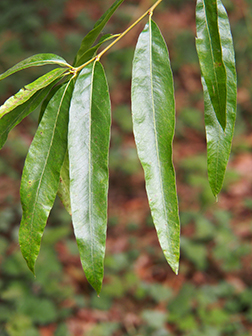
Leaf: Alternate, simple, 2 to 5 inches long, linear or lanceolate in shape (willow-like) with an entire margin and a bristle tip.
Flower: Species is monoecious; males borne on slender yellow-green catkins; females borne on very short axilliary spikes, both appear very early with the leaves.
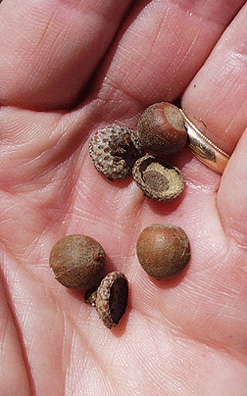
Fruit: Acorns are very small, 1/4 to 1/2 inch across, nearly round and yellow-green, turning tan when older, caps are thin, saucer-like and cover only 1/4 of acorn with thin, tomentose, appressed scales.
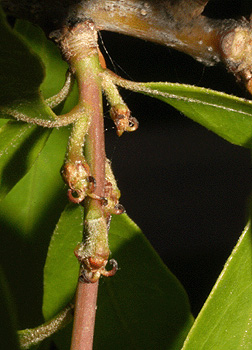
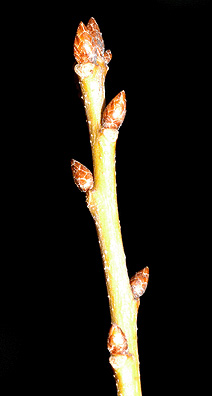
Twig: Slender, hairless, olive-brown in color when young; multiple terminal buds are very small, reddish brown and sharp-pointed.
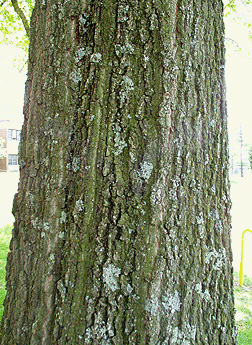
Bark: On young stems, smooth, gray and tight; later becoming darker and forming irregular rough ridges and furrows.
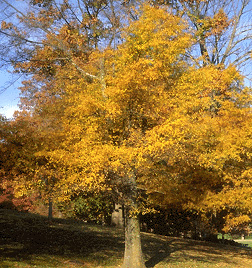
Form: A medium sized tree up to 80 feet tall that forms a dense oblong crown when open grown; lower branches do not readily self-prune.
Looks like: water oak
- laurel oak
- shingle oak
- Darlington oak
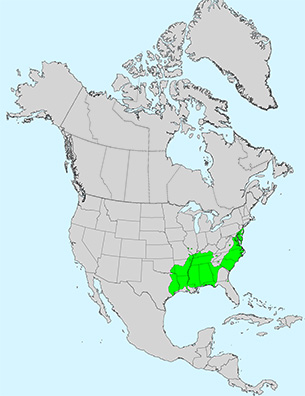
Additional Range Information: Quercus phellos is native to North America. Range may be expanded by planting. Download the full-size PDF map.
More Information: Fall Color - Landowner Factsheet
External Links: USDAFS Silvics of North America - USDAFS FEIS Silvics - USDA Plants Database - Horticulture Information - USDAFS Forest Products Lab
All material 2025 Virginia Tech Dept. of Forest Resources and Environmental Conservation; Photos and text by: John Seiler, Edward Jensen, Alex Niemiera, and John Peterson; Silvics reprinted from Ag Handbook 654; range map source information