 Virginia Tech Dendrology
olive Oleaceae Olea
europaea L.

 symbol: OLEU
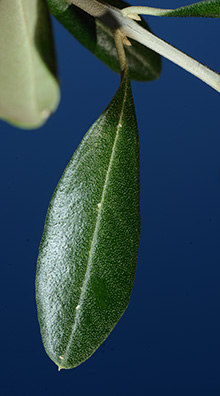
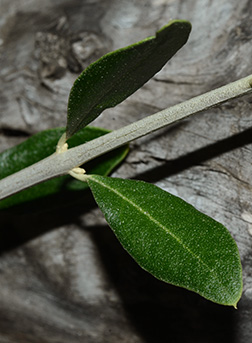
Leaf: Opposite, simple, evergreen, lanceolate or narrow-oblong, 1 to 3 inches long, entire margins, thick and leathery, blue- to gray-green above and much paler beneath.
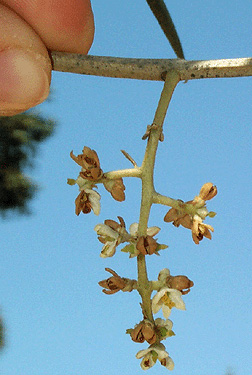
Flower: Clusters of small creamy white to pale yellow flowers appearing from leaf axils in spring.
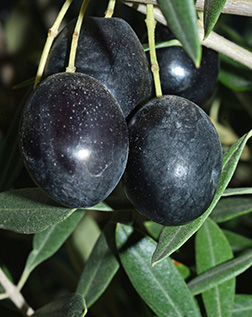
Fruit: Oblong drupe up to 1 1/2 inches long, smooth, green initially but dark reddish purple (nearly black) when ripe in winter.
Twig: moderately stout, light gray-green and finely fuzzy when young.
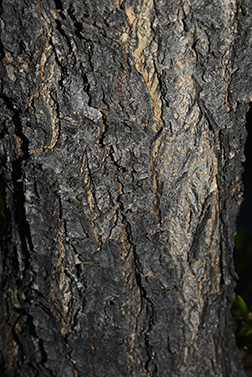
Bark: Light gray-brown, smooth for a long time but eventually becoming finely scale, gnarled and bumpy.
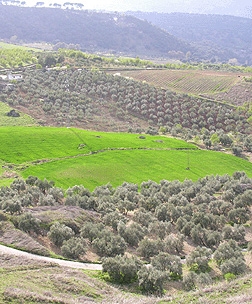
Form: Wild trees are more shrub like; however, most trees seen have been pruned to have single, short trunk with a wide, spreading crown, to 20 or 30 feet. Trunks are generally twisted and contorted.
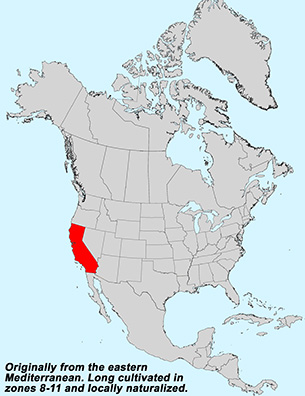
Additional Range Information: Olea europaea is planted in the USDA hardiness zones shown above and may seed into the landscape. Download the full-size PDF map.
External Links: USDA Plants Database
All material 2021 Virginia Tech Dept. of Forest Resources and Environmental Conservation; Photos and text by: John Seiler, Edward Jensen, Alex Niemiera, and John Peterson; Silvics reprinted from Ag Handbook 654; range map source information