 Virginia Tech Dendrology
African sumac Anacardiaceae Rhus
lancea L. f.

 symbol: RHLA11
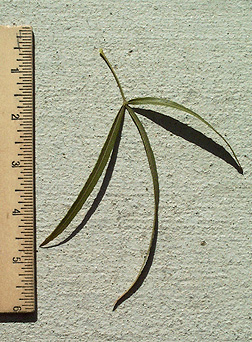
Leaf: Alternate, evergreen, trifoliate compound, linear, narrow leaflets (willow like) each 3 to 5 inches long, entire margins, leathery, often slightly curved, shiny dark green above, paler below.
Flower: Species is dioecious; small, creamy green colored in large tight cluster or spray, appearing in early spring.
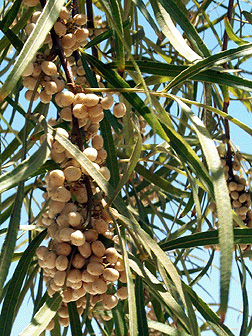
Fruit: Small round, glossy tan drupe, 1/4 inch in diameter in a hanging many branched cluster.
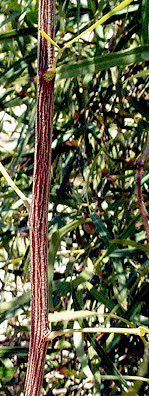
Twig: Slender, light red to greenish tan, darkens with age to a reddish brown.
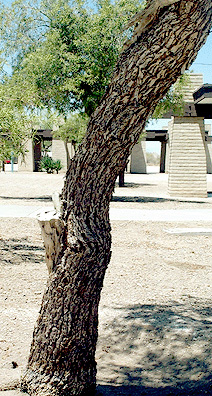
Bark: Dark reddish brown, later becoming lighter and quite scaly.
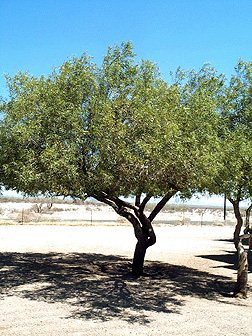
Form: A wide spreading small tree with a dense crown reaching up to 25 feet tall.
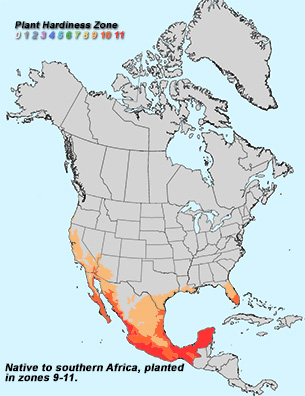
Additional Range Information: Rhus lancea is planted in the USDA hardiness zones shown above and is not known to widely escape cultivaton. Download the full-size PDF map.
External Links: USDA Plants Database
All material 2021 Virginia Tech Dept. of Forest Resources and Environmental Conservation; Photos and text by: John Seiler, Edward Jensen, Alex Niemiera, and John Peterson; Silvics reprinted from Ag Handbook 654; range map source information