 Virginia Tech Dendrology
Mexican buckeye Sapindaceae Ungnadia
speciosa Endl.

 symbol: UNSP
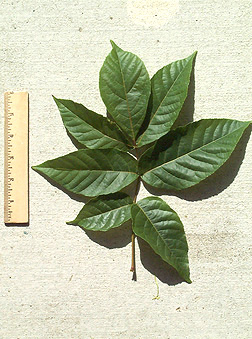
Leaf: Alternate, pinnately compound, to 12 inches overall, with 3-7 ovate to narrowly elliptical leaflets per leaf; leaflets on short stalk, each to 5 inches long with serrate margins, shiny dark green above and pale pubescent below; turning yellow in the fall.
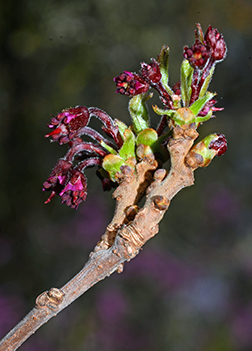
Flower: Bright pink and fragrant, with 5 petals, borne in small clusters; appearing just before or with the leaves.
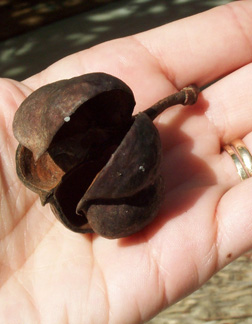
Fruit: A distinctive 3-lobed 1 1/2 inch red-brown woody capsule containing 1-3 shiny dark brown leathery seeds; capsule often persisting on the tree; similar to a buckeye.
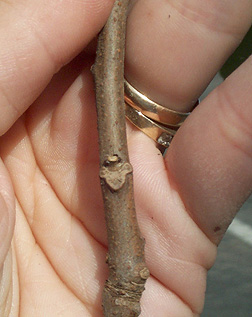
Twig: Stout, orange-brown to gray-brown, pubescent, covered in reddish lenticels; leaf scars broad and 3-lobed; buds are dome-shaped.
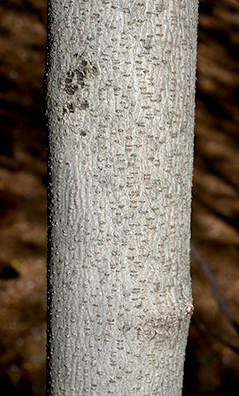
Bark: Young bark is gray-brown and covered with warty lenticels, becoming shallowly fissured.
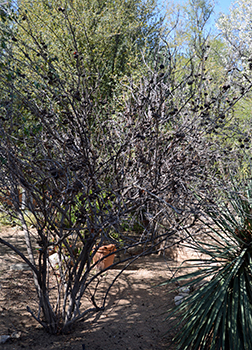
Form: A large shrub or small tree to 30 feet tall with a spreading crown.
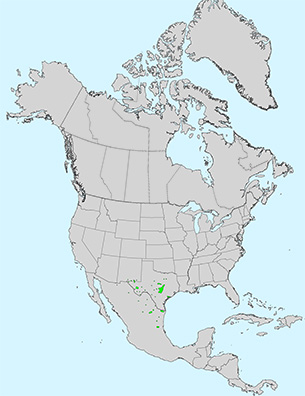
Additional Range Information: Ungnadia speciosa is native to North America. Range may be expanded by planting. Download the full-size PDF map.
External Links: USDAFS FEIS Silvics - USDA Plants Database - Horticulture Information
All material 2025 Virginia Tech Dept. of Forest Resources and Environmental Conservation; Photos and text by: John Seiler, Edward Jensen, Alex Niemiera, and John Peterson; Silvics reprinted from Ag Handbook 654; range map source information