 Virginia Tech Dendrology
creeping mahonia Berberidaceae Mahonia
repens (Lindl.) G. Don

 symbol: MARE11
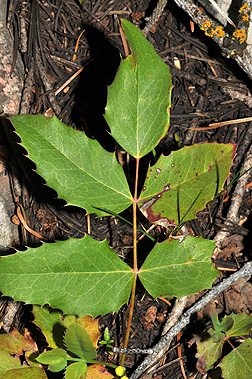
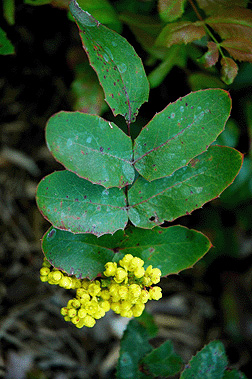
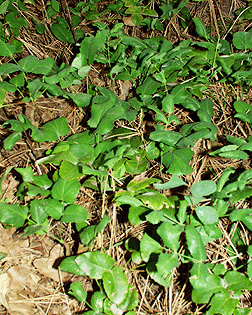
Leaf: Alternate, pinnately compound, evergreen, 5 to 7 inches long, 3 to 7 leaflets (1 to 2 inches long) with spine-tipped teeth, thickened and waxy, dark green above, paler below; turns reddish purple in winter.
Flower: Perfect, small bright yellow flowers are borne in 1 to 3 inch upright racemes.
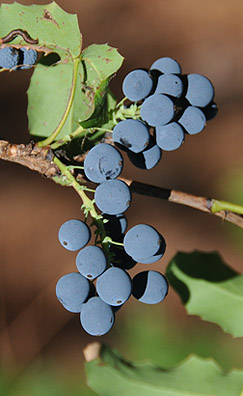
Fruit: Small (1/4 inch), dark blue berries, covered in a waxy bloom, edible, but sour.
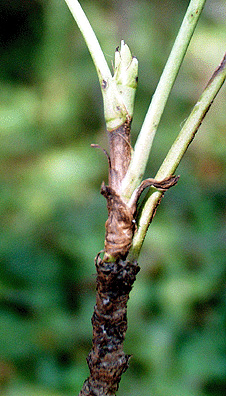
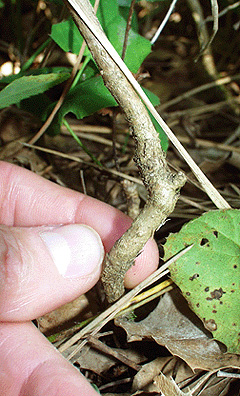
Twig: Main stems are largely unbranched and prostrate; very rough due to numerous leaf scars; green when young, turning reddish brown with age.
Bark: Reddish brown, scaly and rough.
Form: Creeping, stoloniferous, gound cover, may reach up to 18 inches.
Looks like: dwarf Oregon-grape
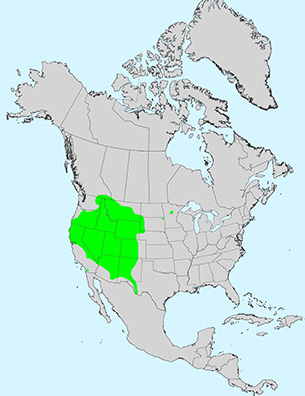
Additional Range Information: Mahonia repens is native to North America. Range may be expanded by planting. Download the full-size PDF map.
External Links: USDAFS FEIS Silvics - USDA Plants Database
All material 2025 Virginia Tech Dept. of Forest Resources and Environmental Conservation; Photos and text by: John Seiler, Edward Jensen, Alex Niemiera, and John Peterson; Silvics reprinted from Ag Handbook 654; range map source information