 Virginia Tech Dendrology
narrowleaf ash Oleaceae Fraxinus
angustifolia Vahl

 symbol:
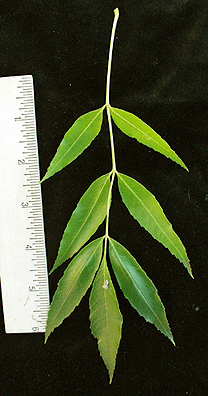
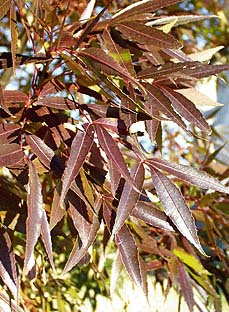
Leaf: Whorled or sometimes opposite, pinnately compound, 8 to 12 inches; 7 to 11 lanceolate leaflets, 2 to 3 inches long, finely serrated, tapering to a sharp point; glossy, shiny dark green above.
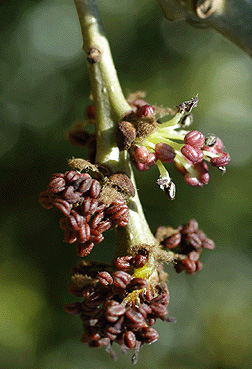
Flower: Species is monoecious; inconspicuous male flowers in tight clusters, maroon; females in looser clusters, light green; appear before the leaves in early spring.
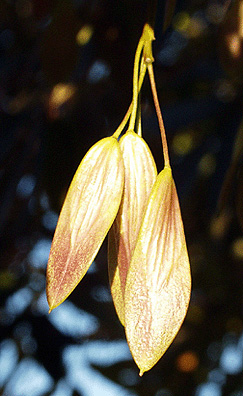
Fruit: Single-winged, straight samara, 1 to 1 1/2 inch long, 1/2 inch wide, papery and often twisted (corkscrew-like), appearing in hanging clusters, pale green but ripening in late summer to a brown color.
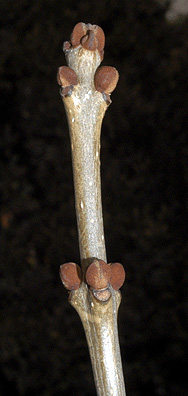
Twig: Stout, light gray-brown; buds large, dark brown leathery scales; leaf scars crescent-shaped.
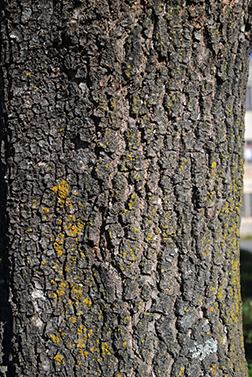
Bark: Brown and smooth when young, becoming ridged and furrowed with age.
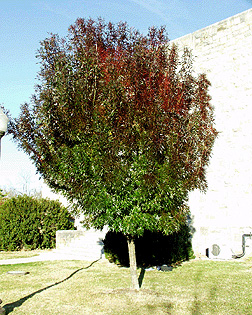
Form: An upright tree with a broadly oval crown reaching up to 80 feet; narrow leaflets give it a fine looking texture.
Looks like: green ash
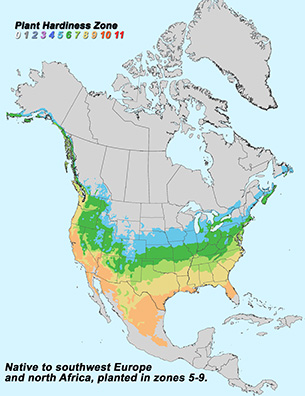
Additional Range Information: Fraxinus angustifolia is planted in the USDA hardiness zones shown above and is not known to widely escape cultivaton. Download the full-size PDF map.
More Information: Fall Color
External Links:
All material 2025 Virginia Tech Dept. of Forest Resources and Environmental Conservation; Photos and text by: John Seiler, Edward Jensen, Alex Niemiera, and John Peterson; Silvics reprinted from Ag Handbook 654; range map source information