 Virginia Tech Dendrology
Swiss stone pine Pinaceae Pinus
cembra L.

 symbol: PICE2
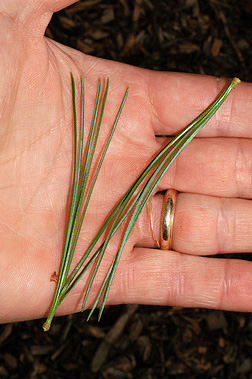
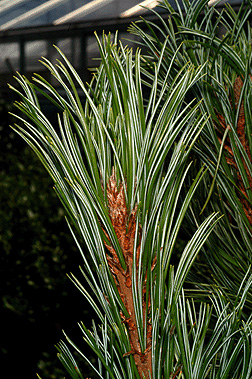
Leaf: Evergreen needles, 2 to 3 1/2 inches long in fascicles of 5, thin, straight, green to blue-green, white stomatal lines on inner edges, deciduous fascicle sheath, dense foliage, persisting for 3 to 5 years.
Flower: Species is monoecious; males cylindrical, purple, in tight clusters at branch tips; females, reddish purple in small groups at branch tips.
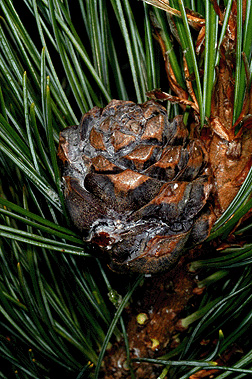
Fruit: Woody cone, nearly round, up to 3 inches long, thick, purple-brown scales, scales remain closed; large, wingless edible seed, seeds are disseminated by birds and when cones fall to the ground and rot.
Twig: Moderately stout, densely covered in orange-brown hairs when young, later becoming smooth; ovoid buds are reddish brown.
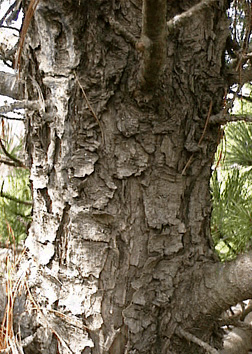
Bark: Smooth green-gray when young, becoming furrowed with flat scaly gray-brown ridges.
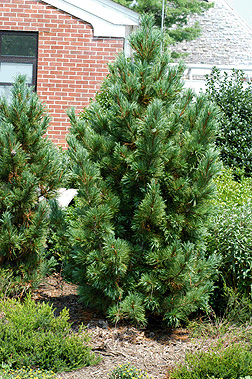
Form: Reaches up to 80 feet tall, generally shorter in the landscape, initially with a narrow, dense crown, later becoming broader and more open with upturned branches that are retained close to the ground, very picturesque in its high elevation native habitat.
Looks like: Japanese white pine
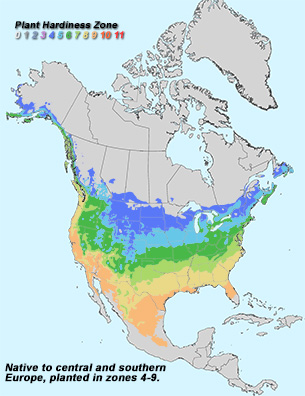
Additional Range Information: Pinus cembra is planted in the USDA hardiness zones shown above and is not known to widely escape cultivaton. Download the full-size PDF map.
External Links: USDA Plants Database
All material 2025 Virginia Tech Dept. of Forest Resources and Environmental Conservation; Photos and text by: John Seiler, Edward Jensen, Alex Niemiera, and John Peterson; Silvics reprinted from Ag Handbook 654; range map source information