 Virginia Tech Dendrology
sweet acacia Fabaceae Vachellia
farnesiana (L.) Wight & Arn.

 symbol: VAFA
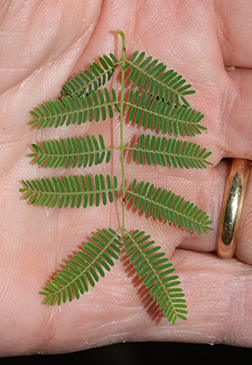
Leaf: Alternate, evergreen, bipinnately compound, 2 to 4 inches long, with 3 to 6 pairs of major leaflets and 10 to 20 pairs of minor, very finely divided leaflets, green to grayish green.
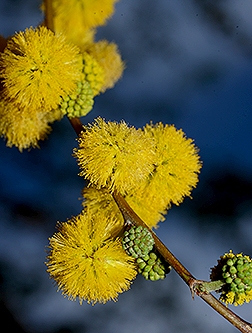
Flower: Species is monoecious; many small, yellow to orange, in a tight round cluster (balls), 1/2 inch across on a 2 to 3 inch long stalk, fragrant, appearing in early spring.
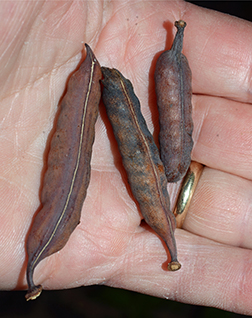
Fruit: A 2 to 3 inch long legume, rounded in cross section, dark brown to nearly black, flattened seeds inside.
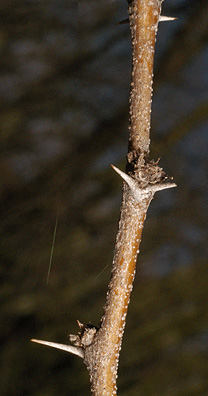
Twig: Slender, slightly zigzag, olive-brown to brown, speckled with light colored lenticels, a pair of straight, light colored spines (1/2 inch long) at the base of each leaf, spur shoots numerous; buds sunken in leaf scar.
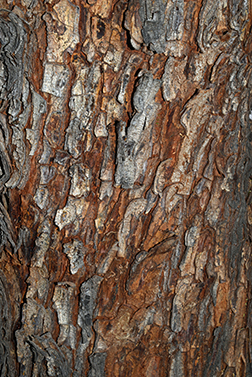
Bark: Initially smooth and olive green, turning brown to gray-brown and becoming furrowed and scaly.
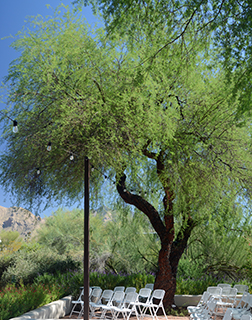
Form: Upright, multi-branched, large, thicket forming shrub or a small tree up to 20 feet in height with a spreading crown.
Looks like: catclaw acacia
- guajillo
- Texas ebony
- fairy duster
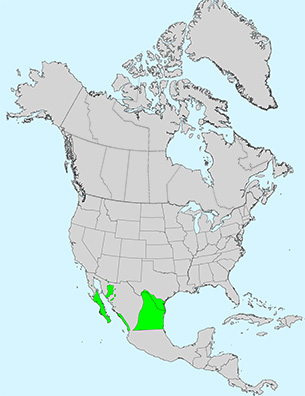
Additional Range Information: Vachellia farnesiana is native to North America. Range may be expanded by planting. Download the full-size PDF map.
External Links: USDA Plants Database - Horticulture Information
All material 2025 Virginia Tech Dept. of Forest Resources and Environmental Conservation; Photos and text by: John Seiler, Edward Jensen, Alex Niemiera, and John Peterson; Silvics reprinted from Ag Handbook 654; range map source information