 Virginia Tech Dendrology
late lilac Oleaceae Syringa
villosa Vahl

 symbol: SYVI3
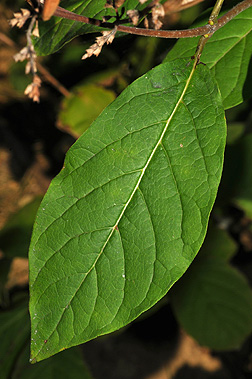
Leaf: Opposite, simple, elliptical to ovate, entire, 3 to 6 inches, veins a bit sunken, dark green above, paler below, mid-vein fuzzy on leaf underside.
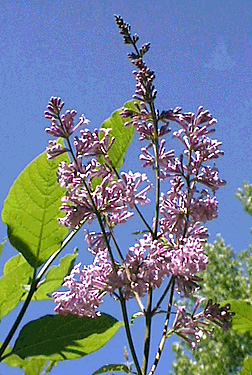
Flower: Purple to white (cultivar dependent), fragrant (not as much as Syringa vulgaris), each 1/2 inch long, trumpet shaped with 4 lobes; occur in terminal clusters of current years growth, appearing in late spring to early summer.
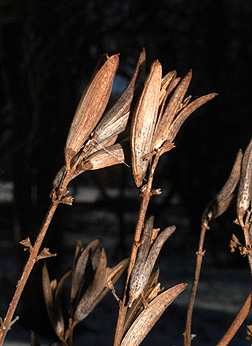
Fruit: Dry, brown capsules, 1/2 inch long in large, open clusters at ends of twigs.
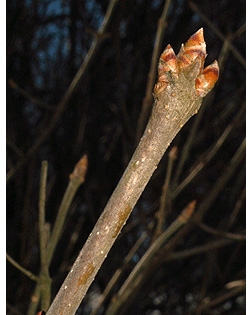
Twig: Stout, gray-brown, numerous lenticels; buds large, ovate and pointed, brown.
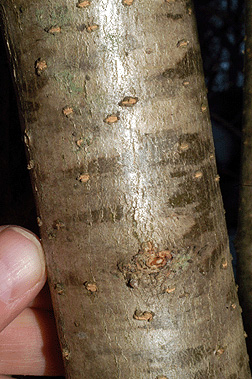
Bark: Gray to gray-brown, smooth with many lenticels ,but may become a bit shreddy or scaly when large.
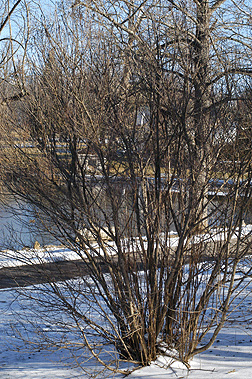
Form: A large, dense, rounded shrub up to 10 feet tall and wide.
Looks like: Japanese tree lilac
- common lilac
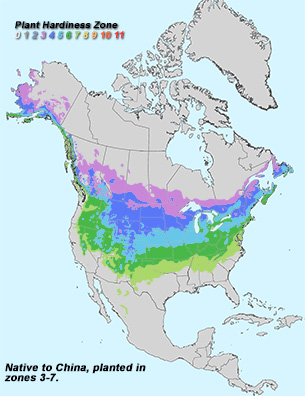
Additional Range Information: Syringa villosa is planted in the USDA hardiness zones shown above and is not known to widely escape cultivaton. Download the full-size PDF map.
External Links: USDA Plants Database
All material 2021 Virginia Tech Dept. of Forest Resources and Environmental Conservation; Photos and text by: John Seiler, Edward Jensen, Alex Niemiera, and John Peterson; Silvics reprinted from Ag Handbook 654; range map source information