 Virginia Tech Dendrology
skunkbush sumac Anacardiaceae Rhus
trilobata Nutt.

 symbol: RHTR
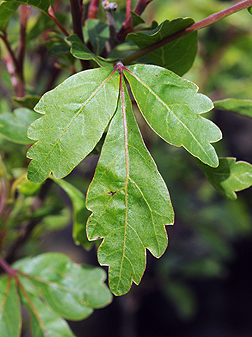
Leaf: Alternate, compound, with 3 variously lobed, coarsely serrated leaflets, leathery (may be scruffy), 2 to 3 inches long, dark green and shiny above, unpleasant odor when crushed.
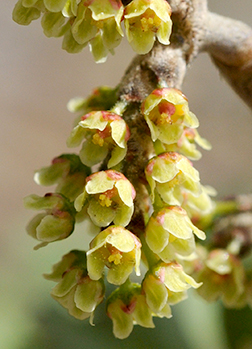
Flower: Small white to creamy yellow flowers in a terminal spike-like cluster, appear in late spring.
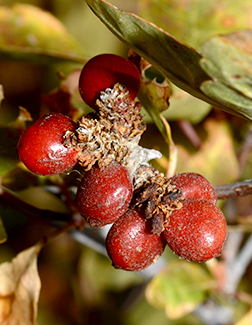
Fruit: Fuzzy, orange-red, round, sticky drupe, 1/4 inch across, in terminal clusters ripen in late summer to early fall.
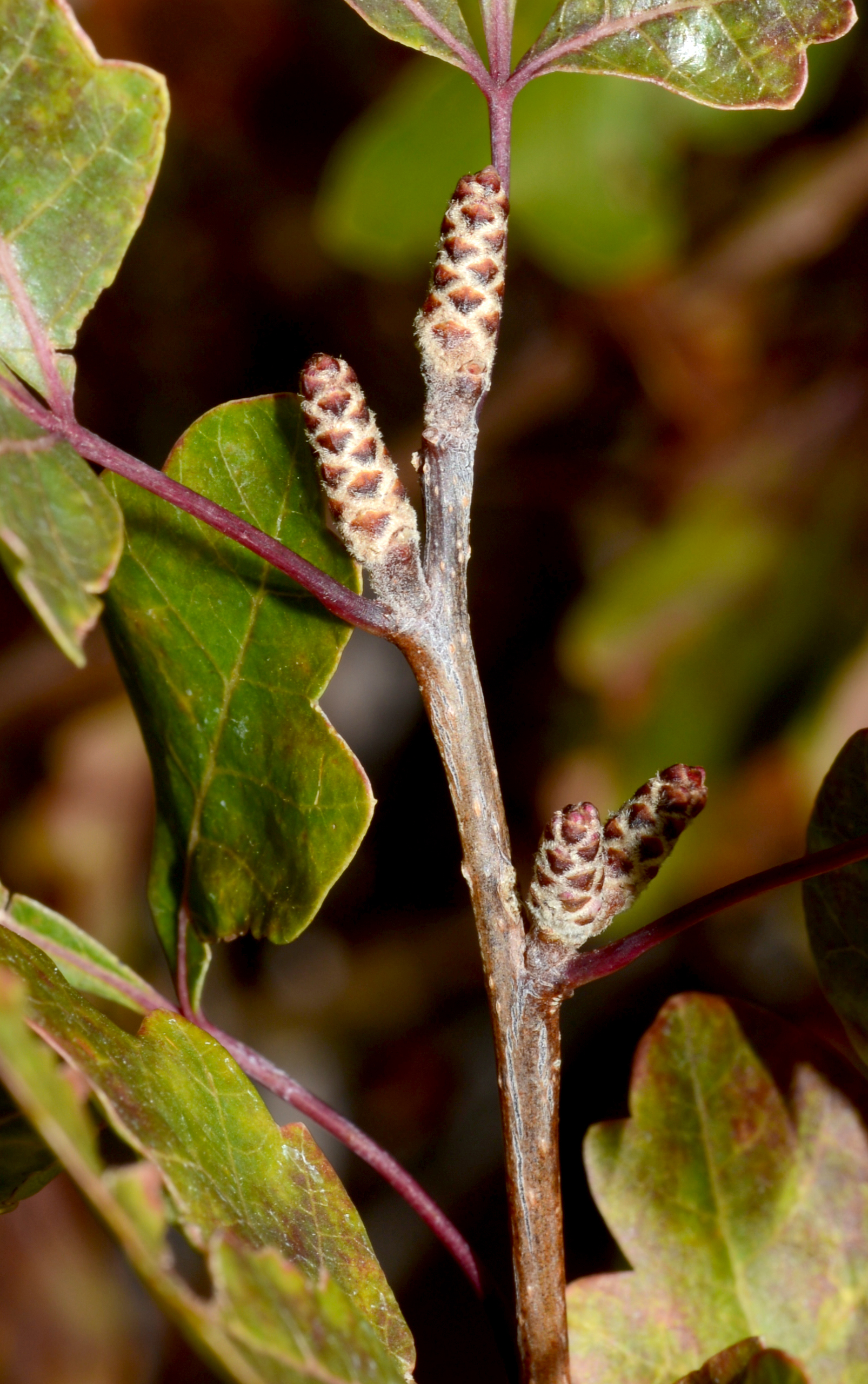
Twig: Moderate, fuzzy gray to yellow brown, raised leaf scar; preformed catkins present in the winter; unpleasant odor when broken.
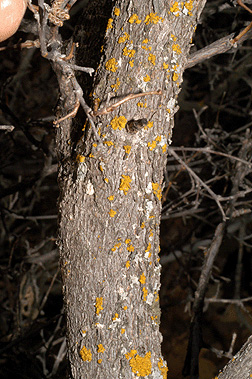
Bark: Gray-brown, smooth with a few shallow fissures and splits with age.
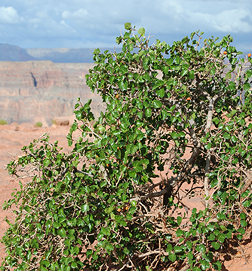
Form: Shrub ranging from 2 to 8 feet in height; it is more branched and short in the southwest part of its range; spread is often much greater than its height.
Looks like: Pacific poisonoak
- fragrant sumac
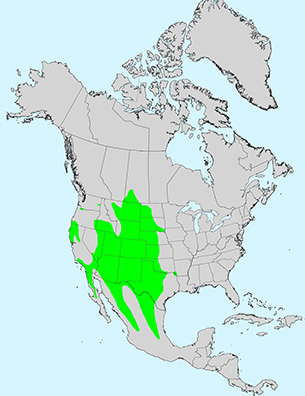
Additional Range Information: Rhus trilobata is native to North America. Range may be expanded by planting. Download the full-size PDF map.
External Links: USDAFS FEIS Silvics - USDA Plants Database
All material 2021 Virginia Tech Dept. of Forest Resources and Environmental Conservation; Photos and text by: John Seiler, Edward Jensen, Alex Niemiera, and John Peterson; Silvics reprinted from Ag Handbook 654; range map source information