 Virginia Tech Dendrology
southern magnolia Magnoliaceae Magnolia
grandiflora L.

 symbol: MAGR4
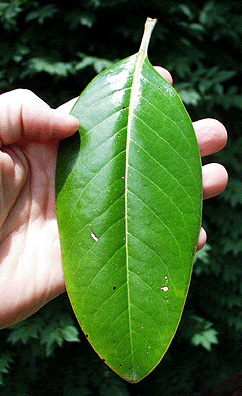
Leaf: Alternate, simple, evergreen, oval to elliptical, 5 to 8 inches long, pinnately veined, entire margin, very thick almost plastic-like, waxy/shiny dark green above, paler with rusty fuzz below.
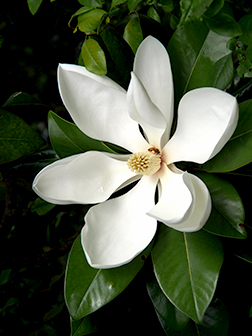
Flower: Species is monoecious; very showy and fragrant, 6 to 8 inches wide with large white petals, occur singly in late spring and occasionally a few in the fall.
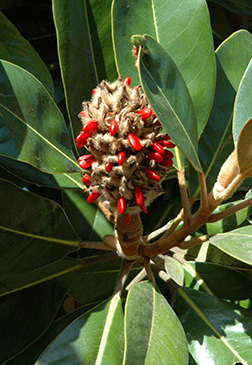
Fruit: An aggregate of follicles, green changing to red and later to brown, cylindrical, 3 to 5 inches long with a bright red seed (1/2 inch long) in each follicle, maturing in fall.
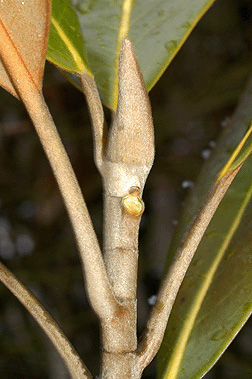
Twig: Stout, with white to rusty tomentum and a long (1 to 1 1/2 inches) silky white to rusty red terminal bud.
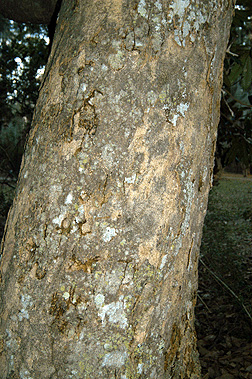
Bark: Brown to gray, thin, smooth/lenticellate when young, later with close plates or scales.
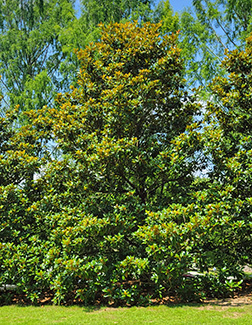
Form: A medium sized tree up to 80 feet with a pyramidal crown. When open grown, the crown is dense with low branches.
Looks like: great rhododendron
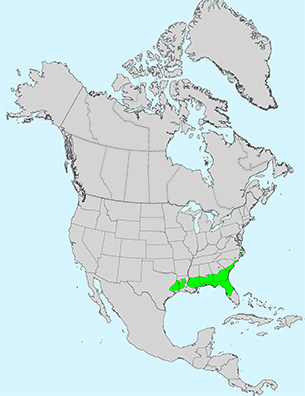
Additional Range Information: Magnolia grandiflora is native to North America. Range may be expanded by planting. Download the full-size PDF map.
More Information: Wood

External Links: USDAFS Silvics of North America - USDAFS FEIS Silvics - USDA Plants Database - Horticulture Information - USDAFS Forest Products Lab
All material 2025 Virginia Tech Dept. of Forest Resources and Environmental Conservation; Photos and text by: John Seiler, Edward Jensen, Alex Niemiera, and John Peterson; Silvics reprinted from Ag Handbook 654; range map source information