 Virginia Tech Dendrology
white mulberry Moraceae Morus
alba L.

 symbol: MOAL
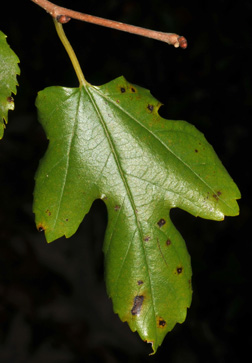
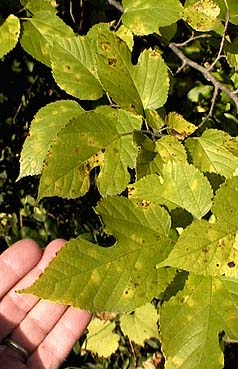
Leaf: Alternate, simple, roughly orbicular in shape, 3 to 6 inches long with a serrate margin, often irregularly lobed, smooth above.
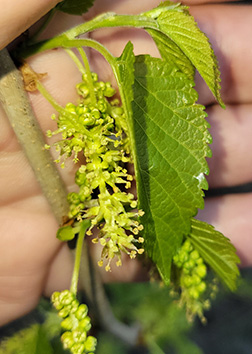
Flower: Species is usually dioecious; small, green catkins, male flowers narrow, 1 to 2 inches long; female flowers plump, 1 inch long.
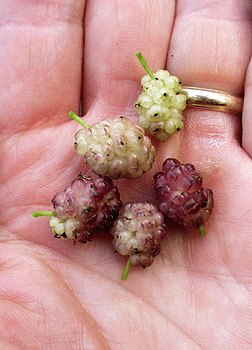
Fruit: Resembling blackberries, cylindrical, 1 to 1 1/4 inch long, fleshy multiple of drupes, pale pink to dark red, not as juicy as red mulberry, maturing in late summer.
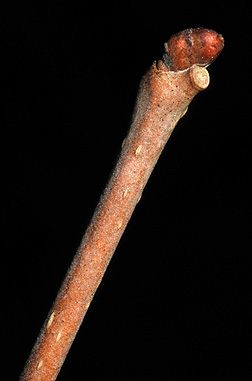
Twig: Slender, zigzag, gray to orange-brown, smooth, buds reddish brown with numerous scales, scales often lack dark edges, leaf scar sunken oval, broken twigs display silvery white filaments.
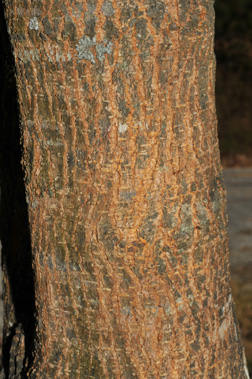
Bark: Orange-brown with lenticels when young, becoming gray with long narrow irregular ridges.
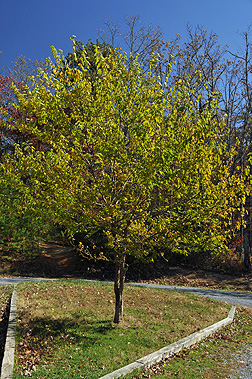
Form: A small tree up to 40 feet tall, branches low and develops a wide spreading crown
Looks like: red mulberry
- paper mulberry
- Osage-orange
- Texas mulberry
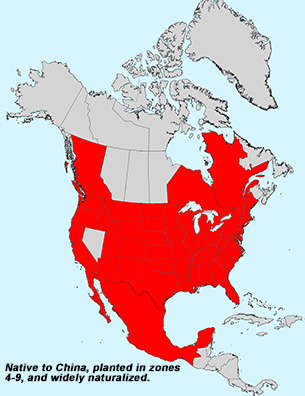
Additional Range Information: Morus alba is planted in the USDA hardiness zones shown above and may seed into the landscape. Download the full-size PDF map.
More Information: Fall Color
External Links: USDAFS FEIS Silvics - USDA Plants Database - Horticulture Information
All material 2025 Virginia Tech Dept. of Forest Resources and Environmental Conservation; Photos and text by: John Seiler, Edward Jensen, Alex Niemiera, and John Peterson; Silvics reprinted from Ag Handbook 654; range map source information