 Virginia Tech Dendrology
creosote bush Zygophyllaceae Larrea
tridentata (DC.) Coville

 symbol: LATR2
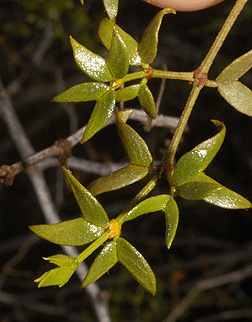
Leaf: Opposite, simple, evergreen, compound with 2 small (1/4 to 1/2 inch long) leaflets, generally elliptical but often curved, yellow-green to green and appear varnished, fragrant particularly after a rain.
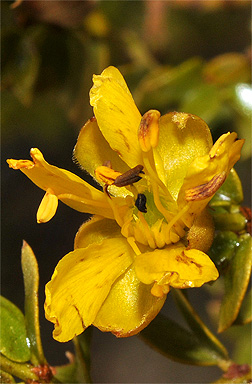
Flower: Five bright yellow twisted sepals, about 1 to 1 1/2 inches across, occur at the ends of the twigs, appearing in spring and scattered throughout the year.
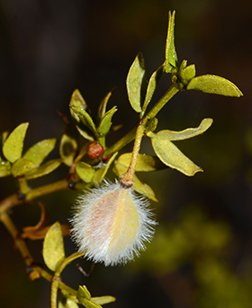
Fruit: Capsule (1/4 inch), covered in long, stiff white hairs.
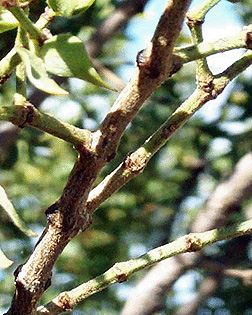
Twig: Slender, light gray to reddish brown, each node is ringed in a darker color and is slightly swollen.
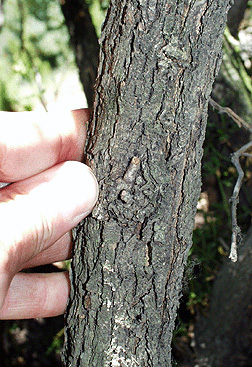
Bark: Initially smooth and gray, eventually becomes darker and splits into shallow fissures and flat plates.
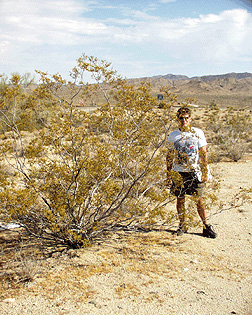
Form: A multi-stemmed shrub commonly up to 4 feet tall but may reach 15 feet, generally a round shape. Spreads by cloning itself along the edges of the plant often resulting in a circular pattern of "cloned" plants.
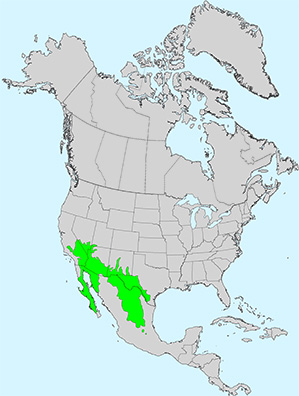
Additional Range Information: Larrea tridentata is native to North America. Range may be expanded by planting. Download the full-size PDF map.
External Links: USDAFS FEIS Silvics - USDA Plants Database
All material 2025 Virginia Tech Dept. of Forest Resources and Environmental Conservation; Photos and text by: John Seiler, Edward Jensen, Alex Niemiera, and John Peterson; Silvics reprinted from Ag Handbook 654; range map source information