 Virginia Tech Dendrology
water birch Betulaceae Betula
occidentalis Hook.

 symbol: BEOC2
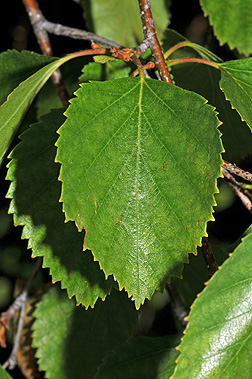
Leaf: Alternate, simple, deciduous, ovate to diamond-shaped, 3/4 to 2 inches long, yellow-green above and initially sticky but becoming smooth, paler and glandular below. Margins distinctly serrated or doubly serrated, except near the base.
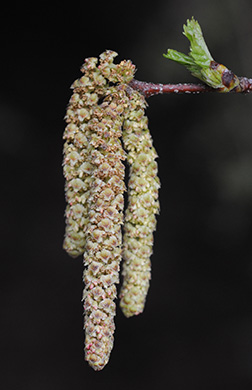
Flower: Species is monoecious; with both sexes borne in aments (catkins), male aments preformed and clustered, female aments usually solitary.
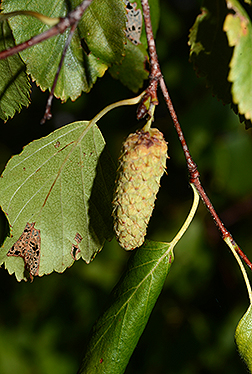
Fruit: A cylindrical papery strobile (cone) that disintegrates at maturity, 1 inch long, seeds are tiny winged nutlets.
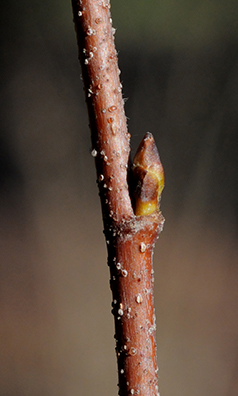
Twig: Young twigs are green and sticky, but turn reddish brown and resin-dotted, eventually turn gray-brown and smooth.
Bark: Thin and smooth, but dotted with conspicuous lenticles, almost black when young, but turning reddish brown to copper-colored as it ages, older bark may loosen and curl but does not exfoliate.
Form: A loosely branched deciduous shrub or small tree growing to 40 feet tall and 1 foot in diameter.
Looks like: paper birch
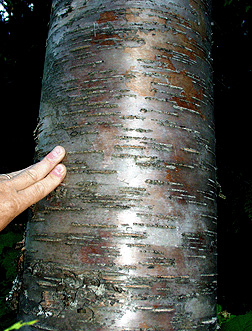
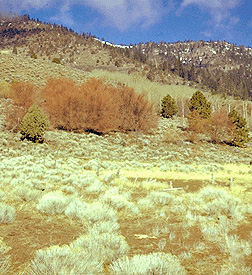
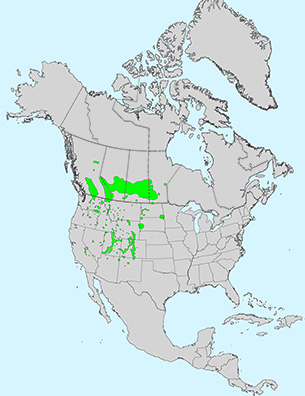
Additional Range Information: Betula occidentalis is native to North America. Range may be expanded by planting. Download the full-size PDF map.
More Information: Fall Color
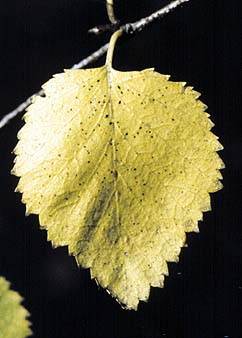
External Links: USDAFS FEIS Silvics - USDA Plants Database - USDAFS Forest Products Lab
All material 2021 Virginia Tech Dept. of Forest Resources and Environmental Conservation; Photos and text by: John Seiler, Edward Jensen, Alex Niemiera, and John Peterson; Silvics reprinted from Ag Handbook 654; range map source information