 Virginia Tech Dendrology
eastern baccharis Asteraceae Baccharis
halimifolia L.

 symbol: BAHA
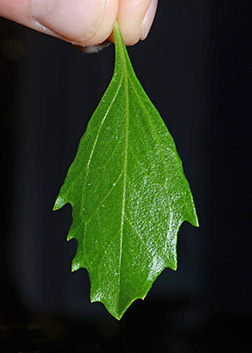
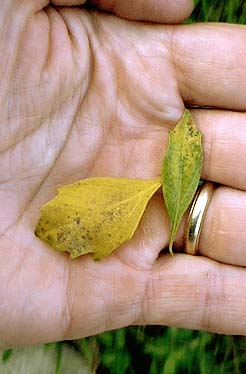
Leaf: Alternate, semi-evergreen, variable in shape, obovate to narrowly oblong, some nearly diamond-shaped, 1 to 2 1/2 inches long, upper half of leaf with a few coarse teeth, leaves from upper crown and near ends of twig often lacking teeth, shiny green above, may be sticky, paler beneath.
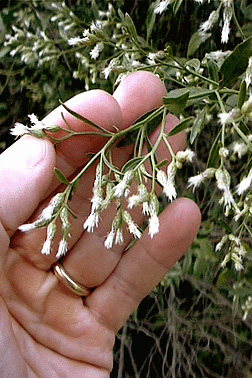
Flower: Species is dioecious; both male and female flowers occur in terminal, branched clusters and appear as feathery white tufts (some purple), about 1/4 to 1/2 inch long, appearing in late summer.
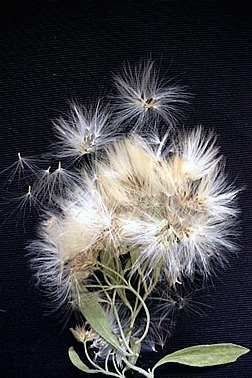
Fruit: A small achene tipped with long feathery white bristles (dandelion like), ripen in early fall and often in great abundance giving the plant a silvery look.
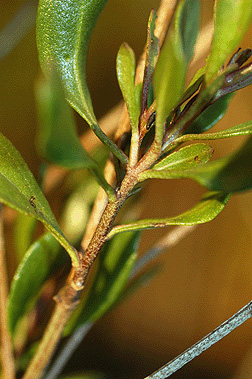
Twig: Slender, green and angled, may be sticky.
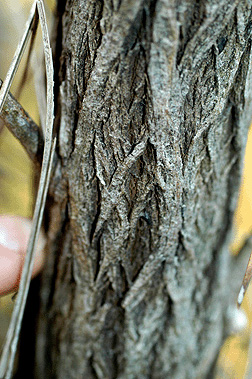
Bark: Gray, reddish brown, developing furrows and flat-topped ridges.
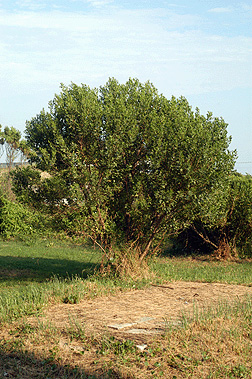
Form: An upright shrub to 15 feet with numerous branches forming a rounded or oval crown. It can form dense thickets in open areas.
Looks like: marsh-elder
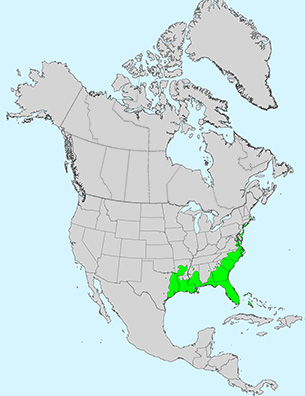
Additional Range Information: Baccharis halimifolia is native to North America. Range may be expanded by planting. Download the full-size PDF map.
More Information: Fall Color
External Links: USDAFS FEIS Silvics - USDA Plants Database - Horticulture Information
All material 2025 Virginia Tech Dept. of Forest Resources and Environmental Conservation; Photos and text by: John Seiler, Edward Jensen, Alex Niemiera, and John Peterson; Silvics reprinted from Ag Handbook 654; range map source information