 Virginia Tech Dendrology
gray rabbitbrush Asteraceae Ericameria
nauseosa (Pall. ex Pursh) G.L. Nesom & Baird

 symbol: ERNA10
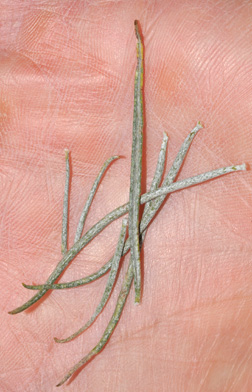
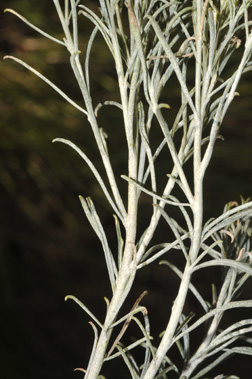
Leaf: Alternate, simple, deciduous, long and narrow (up to 2 1/2 inches long but only 1/8 inch wide), gray-green and pubescent on both surfaces (often densely so); sessile (no petiole); non-aromatic.
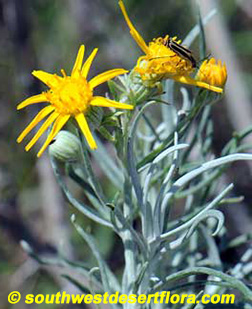
Flower: Perfect, small yellow conical flowers borne in rounded clusters.
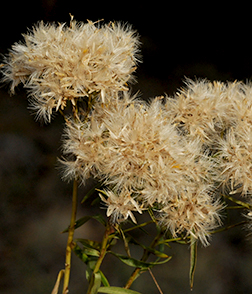
Fruit: Single tufted achenes with angled or ribbed sides; seed heads may be smooth or minutely hairy.
Twig: Young twigs are slender, round, grayish to light yellow in color; pubescent. Cut twigs exude a milky latex that contains a high grade rubber called chrysil.
Bark: Fibrous, gray-brown, becoming shreddy.
Form: Erect shrub with multiple slender stems. Often grow in rounded mounds several feet tall, but may reach 7 feet.
Looks like: turpentine bush
- narrowleaf goldenbush
- Palmer's goldenbush
- yellow rabbitbrush

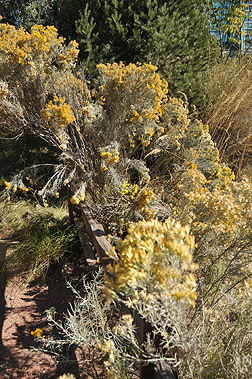
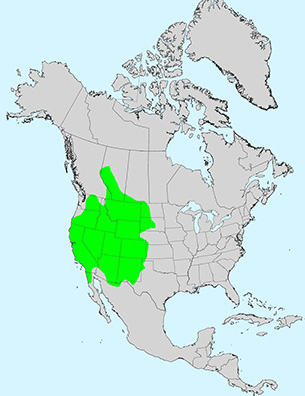
Additional Range Information: Ericameria nauseosa is native to North America. Range may be expanded by planting. Download the full-size PDF map.
External Links: USDAFS FEIS Silvics - USDA Plants Database
All material 2025 Virginia Tech Dept. of Forest Resources and Environmental Conservation; Photos and text by: John Seiler, Edward Jensen, Alex Niemiera, and John Peterson; Silvics reprinted from Ag Handbook 654; range map source information