 Virginia Tech Dendrology
American elm Ulmaceae Ulmus
americana L.


 symbol: ULAM
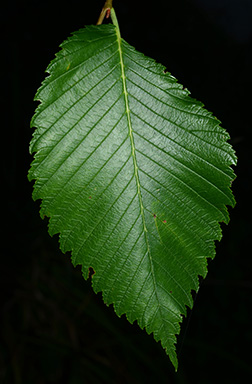
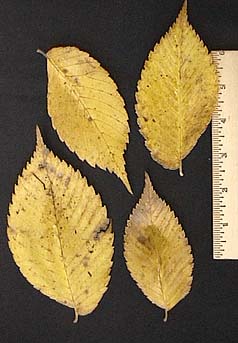
Leaf: Alternate, simple, ovate to oblong, 3 to 5 inches long, 1 to 3 inches wide, margin coarsely and sharply doubly serrate, base conspicuously inequilateral, upper surface green and glabrous or slightly scabrous, paler and downy beneath.
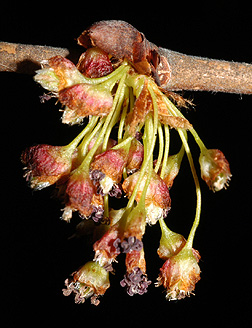
Flower: Species is monoecious; small, in drooping clusters of 3 to 5, appear in early spring before leaf buds open.
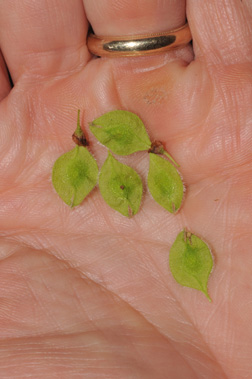
Fruit: Rounded, flat, papery, wafer-like samaras, 3/8 to 1/2 inch across, deeply notched at apex, hairless except for margin; ripen in spring.
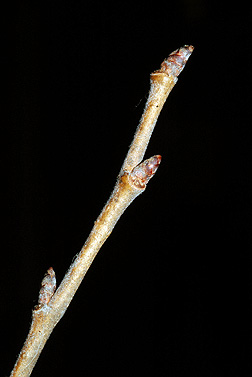
Twig: Slender, glabrous, slightly zigzag, reddish brown; buds ovate, over 1/4 inch long, reddish brown with darker edged scales, often placed a little to one side of the twig.
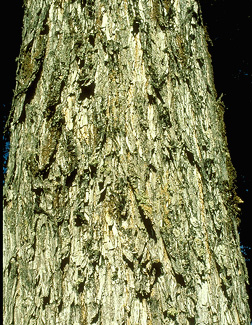
Bark: Dark, ashy gray, flat-topped ridges separated by diamond-shaped fissures; outer bark when sectioned shows distinct, alternating, buff colored and reddish brown patches. When young it is often quite spongy.
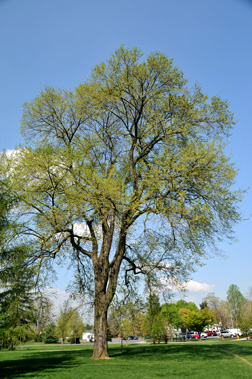
Form: In the open, the trunk is usually divided into several large, ascending and arching limbs, ending in a maze of graceful drooping branchlets.
Looks like: slippery elm
- winged elm
- cedar elm
- field elm
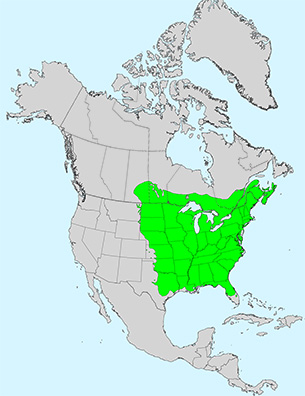
Additional Range Information: Ulmus americana is native to North America. Range may be expanded by planting. Download the full-size PDF map.
More Information: Fall Color - Wood
External Links: USDAFS Silvics of North America - USDAFS FEIS Silvics - USDA Plants Database - Horticulture Information - USDAFS Forest Products Lab
All material 2025 Virginia Tech Dept. of Forest Resources and Environmental Conservation; Photos and text by: John Seiler, Edward Jensen, Alex Niemiera, and John Peterson; Silvics reprinted from Ag Handbook 654; range map source information