 Virginia Tech Dendrology
mountain maple Aceraceae Acer
spicatum Lam.

 symbol: ACSP2
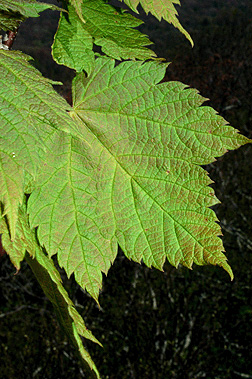
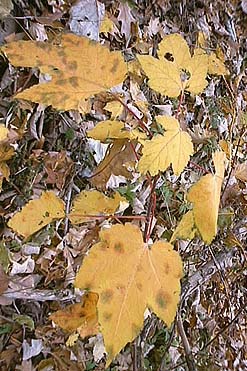
Leaf: Opposite, simple, orbicular, 3 to 4 inches long, 3 sometimes 5 short lobes, broad v-shaped sinuses, coarsely serrated margin; dark yellowish green above and paler, somewhat hairy below.
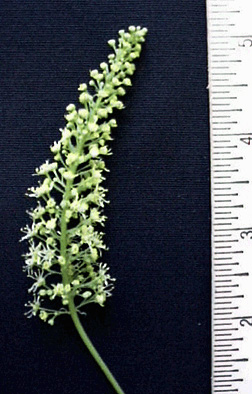
Flower: Species is monoecious; greenish yellow, in 3 to 6 inch erect, slender, terminal clusters, appearing after the leaves in early summer.
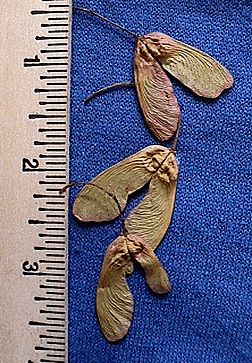
Fruit: Paired samaras, 1/2 inch long, spreading less than 90 degrees, seed cavity indented on one side, occurring in hanging clusters, maturing in late summer.
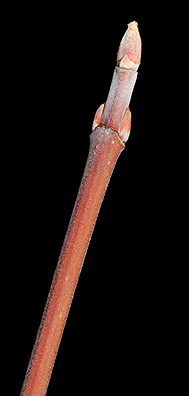
Twig: Slender, yellow-green in summer, generally pale red in winter with short gray fuzz; buds 1/4 inch long, red with some gray fuzz, stalked and valvate.
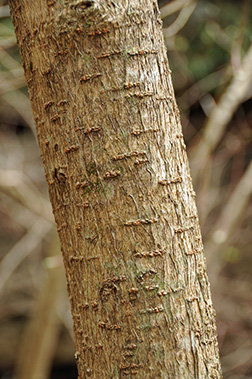
Bark: Thin, grayish brown to light brown, initially smooth but later splitting and developing shallow furrows.
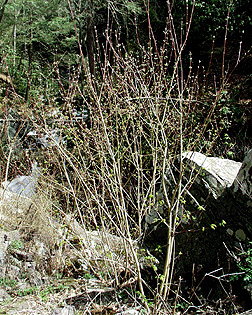
Form: Large shrub or small, tree up to 25 feet tall and 6 inches in diameter.
Looks like: striped maple
- red maple
- sycamore maple
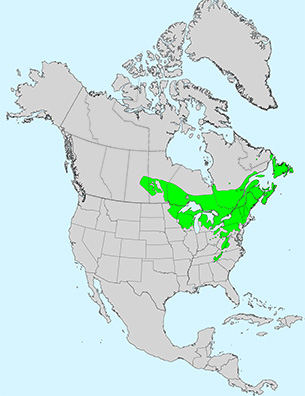
Additional Range Information: Acer spicatum is native to North America. Range may be expanded by planting. Download the full-size PDF map.
More Information: Fall Color
External Links: USDAFS FEIS Silvics - USDA Plants Database - USDAFS Forest Products Lab
All material 2025 Virginia Tech Dept. of Forest Resources and Environmental Conservation; Photos and text by: John Seiler, Edward Jensen, Alex Niemiera, and John Peterson; Silvics reprinted from Ag Handbook 654; range map source information