 Virginia Tech Dendrology
Kwanzan cherry Rosaceae Prunus
serrulata Lindl.

 symbol: PRSE3
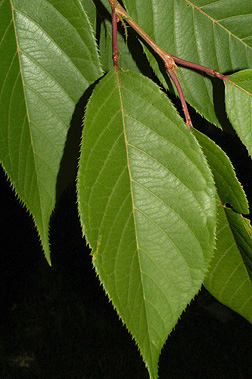
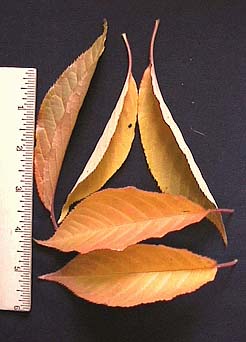
Leaf: Alternate, simple, pinnately veined, serrated margin, lanceolate to broadly ovate, 3 to 5 inches long, shiny dark green above, light green below, petioles have obvious glands.
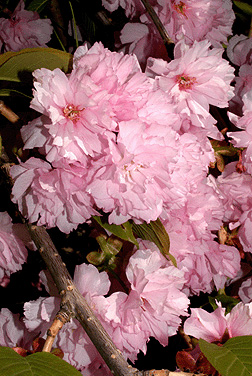
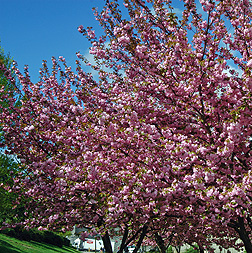
Flower: Very showy, most commonly deep pink, double, occur in large clumps along the stem, in early spring.
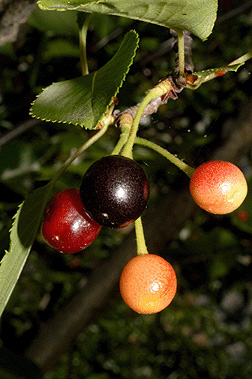
Fruit: Typically no fruit since the 'Kwanzan' variety is sterile, the species P. serrulata produces a small red cherry.
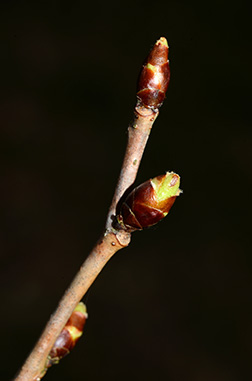
Twig: Stout, reddish brown, conspicuous lenticels, and large reddish buds.
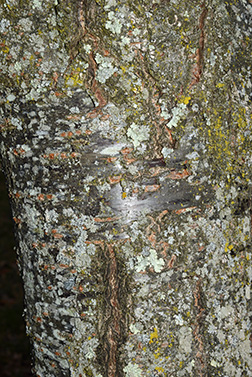
Bark: Thin, smooth, reddish to bronze, glossy with very prominent horizontal lenticels.
Form: A small tree reaching 25 to 30 feet high and wide, usually a vase-shaped, spreading crown.
Looks like: Yoshino cherry
- Higan cherry
- birch bark cherry
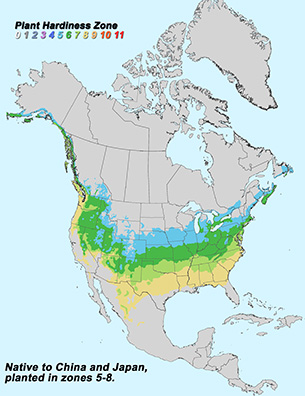
Additional Range Information: Prunus serrulata is planted in the USDA hardiness zones shown above and is not known to widely escape cultivaton. Download the full-size PDF map.
More Information: Fall Color
External Links: USDA Plants Database - Horticulture Information
All material 2021 Virginia Tech Dept. of Forest Resources and Environmental Conservation; Photos and text by: John Seiler, Edward Jensen, Alex Niemiera, and John Peterson; Silvics reprinted from Ag Handbook 654; range map source information