 Virginia Tech Dendrology
winged euonymus Celastraceae Euonymus
alatus (Thunb.) Siebold

 symbol: EUAL13
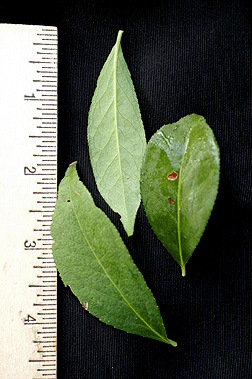
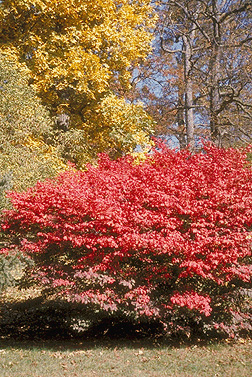
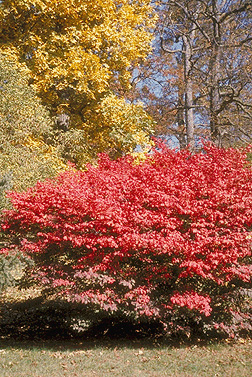
Leaf: Opposite (or partly sub-opposite), simple, elliptical to obovate, 1 1/2 to 3 inches long, finely serrated margin, green above, slightly paler beneath, turns bright red in the fall.
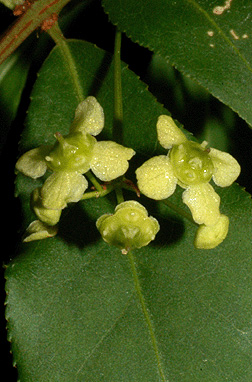
Flower: Perfect, inconspicuous, pale, yellow-green, 1/2 inch across, occur in clusters of three, appear in late spring.
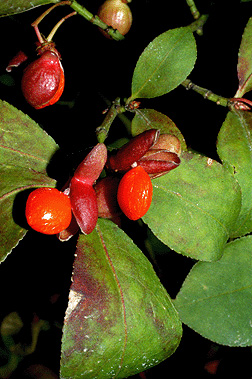
Fruit: A 1/4 to 1/3 inch capsule, dark red outside, splitting open to reveal a bright orange-red aril, ripen in early fall.
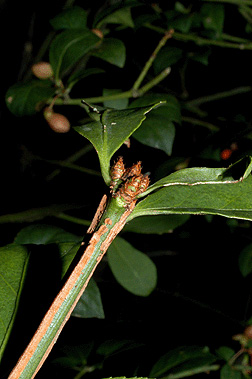
Twig: Moderate, greenish brown with several conspicuous corky wings on each stem; buds sharp pointed and reddish brown.
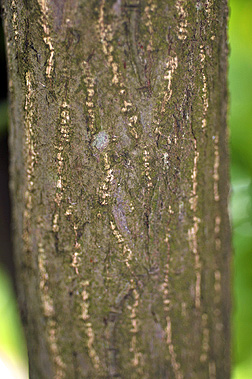
Bark: Gray to gray-brown, splitting revealing a lighter inner bark causing it to look faintly striped.
Form: A multi-stemmed shrub rising to 10 feet, rounded crown unless trimmed. It can also, depending on variety, become a small tree.
Looks like: strawberry bush
- eastern wahoo
- spindletree
- piratebush
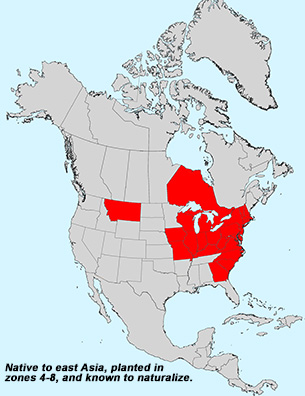
Additional Range Information: Euonymus alatus is planted in the USDA hardiness zones shown above and may seed into the landscape. Download the full-size PDF map.
More Information: Fall Color
External Links: USDAFS FEIS Silvics - USDA Plants Database
All material 2021 Virginia Tech Dept. of Forest Resources and Environmental Conservation; Photos and text by: John Seiler, Edward Jensen, Alex Niemiera, and John Peterson; Silvics reprinted from Ag Handbook 654; range map source information