 Virginia Tech Dendrology
Japanese maple Aceraceae Acer
palmatum Thunb.


 symbol: ACPA2
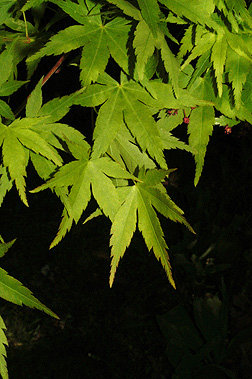
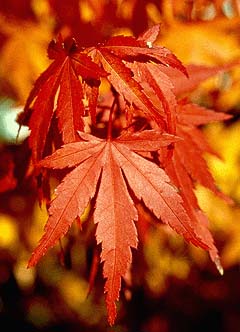
Leaf: Opposite, simple, orbicular in outline, 2 to 5 inches long, serrated margin, 5 to 7 deeply palmate lobes, some cultivars so deeply lobed that leaf appears compound; color highly variable depending on cultivar, commonly deep red.
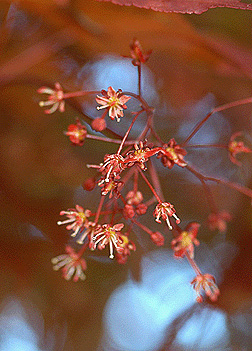
Flower: Species is monoecious; inconspicuous, small, red to purple, in terminal hanging clusters, appearing in mid to late spring.
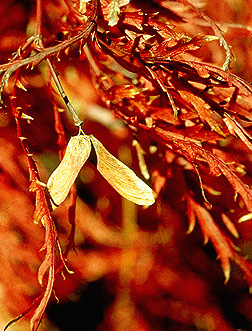
Fruit: Double samara, 3/4 to 1 inch long, divergent (90 degrees) wings, reddish brown, maturing in late summer and a bit persistent.
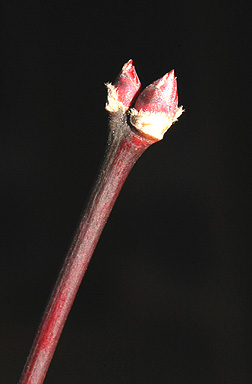
Twig: Slender, glabrous, red or green; buds broadly conical, green or red, base of bud hidden by tan, fuzzy fringe.
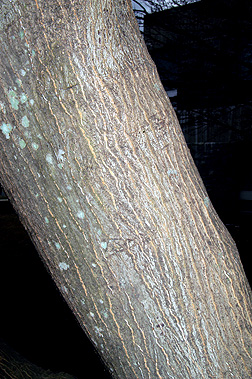
Bark: Smooth, light gray, with a somewhat fluted trunk.
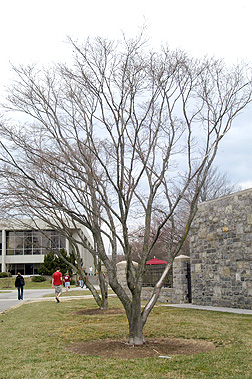
Form: A small tree, 10 to 25 feet in height, round crown, typically multistemmed or branches low. Some cultivars have drooping branches.
Looks like: vine maple
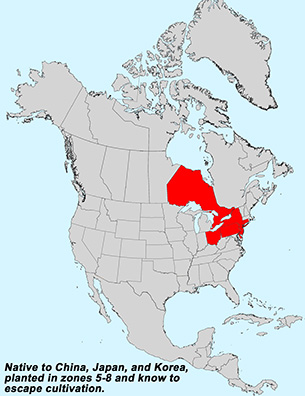
Additional Range Information: Acer palmatum is planted in the USDA hardiness zones shown above and may seed into the landscape. Download the full-size PDF map.
More Information: Fall Color
External Links: USDA Plants Database - Horticulture Information
All material 2021 Virginia Tech Dept. of Forest Resources and Environmental Conservation; Photos and text by: John Seiler, Edward Jensen, Alex Niemiera, and John Peterson; Silvics reprinted from Ag Handbook 654; range map source information