 Virginia Tech Dendrology
paperbark maple Aceraceae Acer
griseum (Franch.) Pax

 symbol: ACGR14
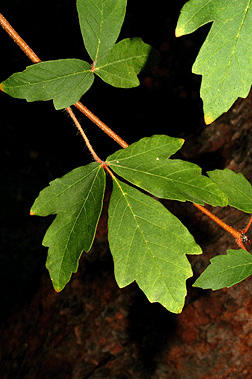
Leaf: Opposite, compound, trifoliate, 3 to 5 inches long, each leaflet coarsely toothed or lobed; green to bluish green above, woolly white beneath, petiole fuzzy.
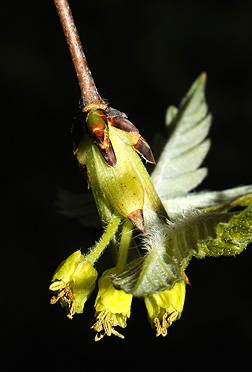
Flower: Yellowish green, on hanging 1" long clusters, appearing in early spring.
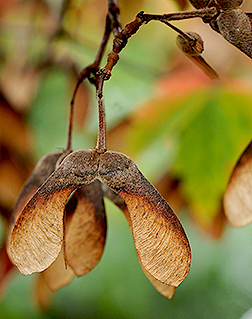
Fruit: Double winged samara, 1 to 1 1/2 inches long, samaras widely spread, velvety seed, reddish brown when ripe in early fall.
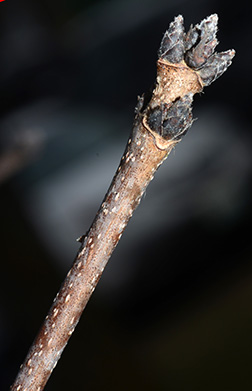
Twig: Slender, brown, lighter lenticels, buds dark brown, conical and sharp pointed.
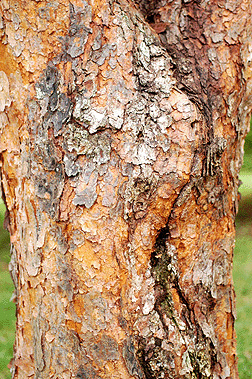
Bark: Very unique, reddish, curling, exfoliating patches reveal a lighter tan or salmon color underneath, older stems may become roughened.
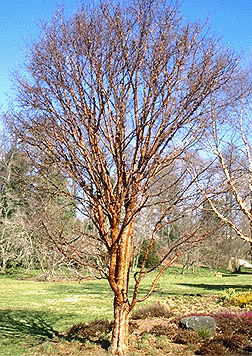
Form: Small tree, 20 to 30 feet in height; typically low branching with a rounded crown.
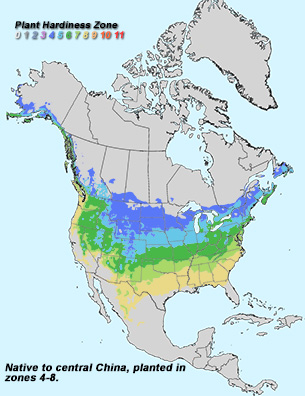
Additional Range Information: Acer griseum is planted in the USDA hardiness zones shown above and is not known to widely escape cultivaton. Download the full-size PDF map.
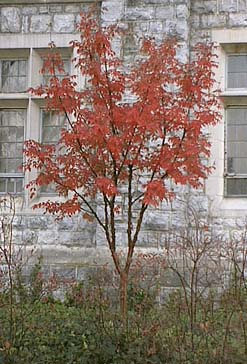
More Information: Fall Color
External Links: USDA Plants Database - Horticulture Information
All material 2025 Virginia Tech Dept. of Forest Resources and Environmental Conservation; Photos and text by: John Seiler, Edward Jensen, Alex Niemiera, and John Peterson; Silvics reprinted from Ag Handbook 654; range map source information