 Virginia Tech Dendrology
Amur honeysuckle Caprifoliaceae Lonicera
maackii (Rupr.) Herder


 symbol: LOMA6
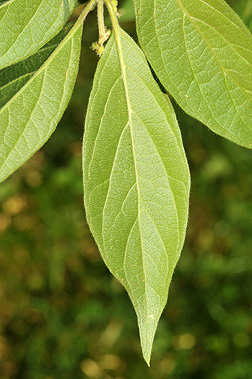
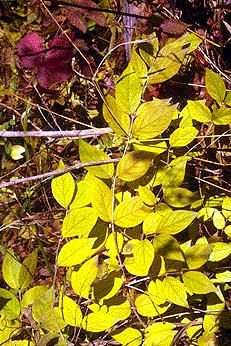
Leaf: Opposite, simple, ovate, 2 to 3 inches long, entire margin, acuminate tip; green above, paler and slightly fuzzy below.
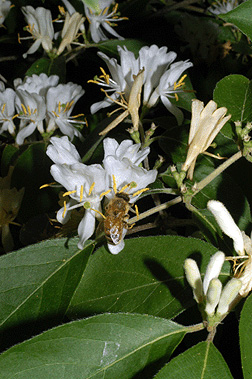
Flower: Species is monoecious; white changing to yellow, 3/4 to 1 inch in length, 4 upper petal lobes fused, very fragrant, appearing in late spring.
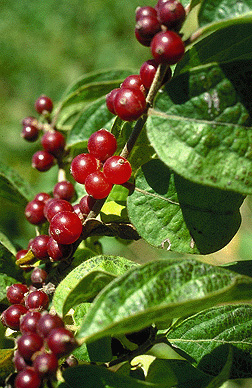
Fruit: Juicy red berry, 1/4 inch in diameter, appearing in late summer often in great abundance, persists into the winter.
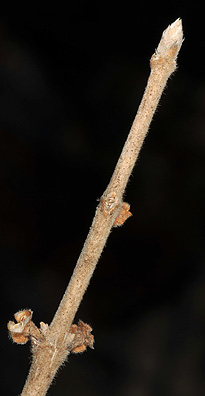
Twig: Slender, glabrous, grayish brown, hollow pith but solid brown at the nodes; opposite, small pointed, light brown buds.
Bark: Develops long, deep fissures, somewhat scaly ridges, grayish brown.
Form: An erect shrub, multi-stemmed, branches often arching, up to 20 feet tall, 15 foot spread.
Looks like: Morrow honeysuckle
- American fly honeysuckle
- Belle's honeysuckle
- Tatarian honeysuckle
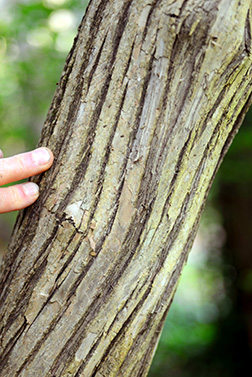
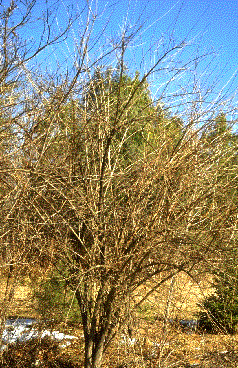
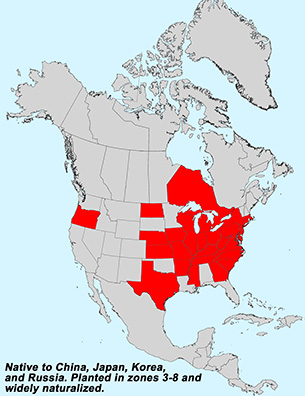
Additional Range Information: Lonicera maackii is planted in the USDA hardiness zones shown above and may seed into the landscape. Download the full-size PDF map.
More Information: Fall Color
External Links: USDAFS FEIS Silvics - USDA Plants Database
All material 2025 Virginia Tech Dept. of Forest Resources and Environmental Conservation; Photos and text by: John Seiler, Edward Jensen, Alex Niemiera, and John Peterson; Silvics reprinted from Ag Handbook 654; range map source information