 Virginia Tech Dendrology
western redcedar Cupressaceae Thuja
plicata Donn ex D. Don

 symbol: THPL
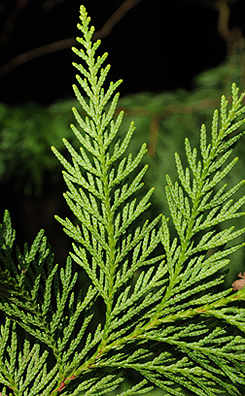
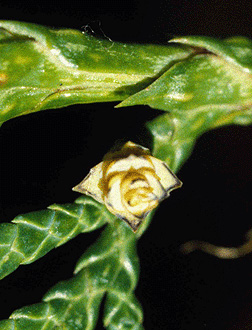
Leaf: Persistent, scale-like, and arranged in decussate pairs; yellow-green on top with a distinctive butterfly shaped bloom pattern on the underside. Individual leaves are typically 1/16 to 1/8 inch long and sets of four are roughly square. Foliage arranged in flattened sprays, dead leaves fall in sprays.
Flower: Species is monoecious; male cones are small and inconspicuous; female cones are small, reddish purple, and borne near the tips of branches.
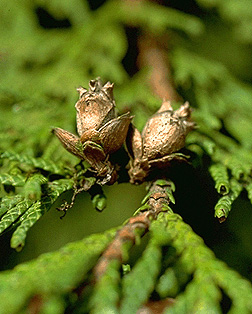
Fruit: Small woody cones (1/2 inch long) with thin, valvate scales arranged in 5 to 6 decussate pairs; typically upturned on the branches.
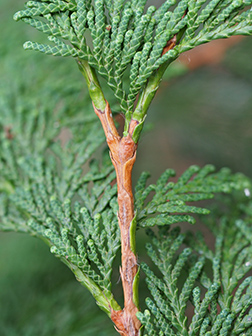
Twig: Younger twigs are flattened while older twigs are round, slender, flexible, and slightly zigzag; reddish brown.
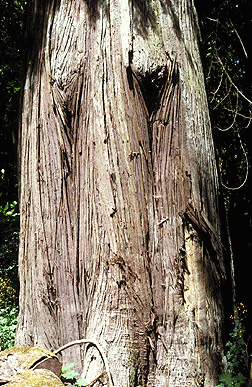
Bark: Thin (1/2 to 3/4 inch thick), fibrous, stringy, and reddish brown; finely ridged and furrowed; intertwined; comes off in long strips.
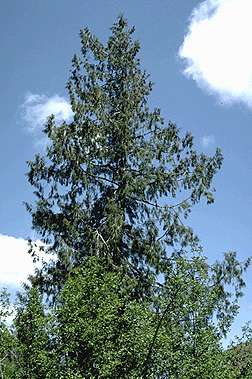
Form: A large evergreen conifer that grows to 200 feet tall and 10 feet in diameter (sometimes more). Has an open, pyramidal crown with pendulous, frond-like branches. Base of trunk is often swollen and fluted.
Looks like: northern white-cedar
- Port-Orford-cedar
- Alaska yellow-cedar
- incense-cedar
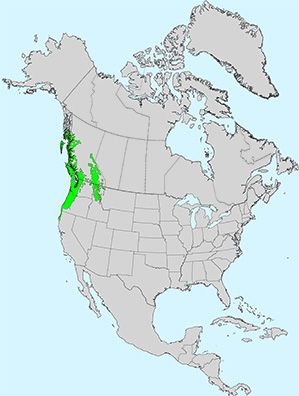
Additional Range Information: Thuja plicata is native to North America. Range may be expanded by planting. Download the full-size PDF map.
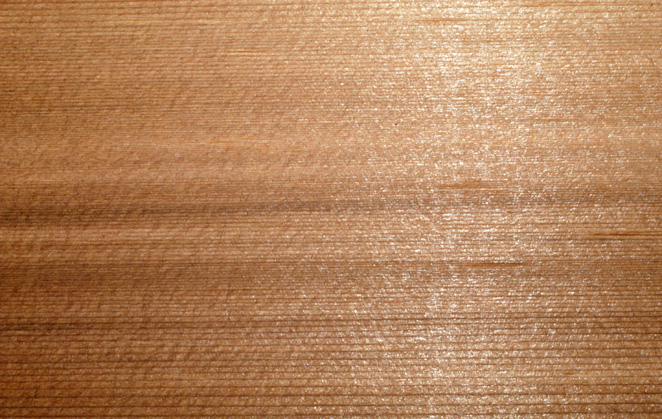
More Information: Wood - Landowner Factsheet
External Links: USDAFS Silvics of North America - USDAFS FEIS Silvics - USDA Plants Database - Horticulture Information - USDAFS Forest Products Lab
All material 2025 Virginia Tech Dept. of Forest Resources and Environmental Conservation; Photos and text by: John Seiler, Edward Jensen, Alex Niemiera, and John Peterson; Silvics reprinted from Ag Handbook 654; range map source information