 Virginia Tech Dendrology
Cascara buckthorn Rhamnaceae Frangula
purshiana (DC.) A. Gray

 symbol: FRPU7
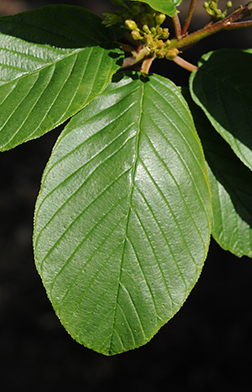
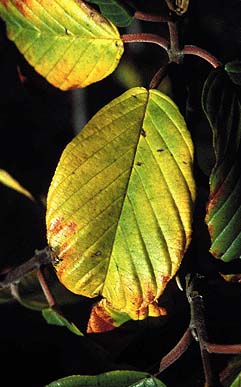
Leaf: Alternate, simple, deciduous, oblong to elliptical, 2 to 6 inches long, dark glossy green above and paler below, prominently penniveined, margins wavy or finely serrate.
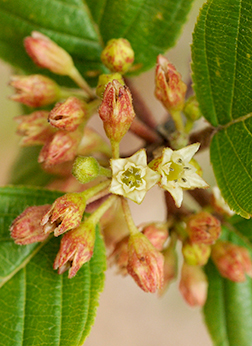
Flower: Species is monoecious; with either perfect flowers or imperfect flowers on the same plant, inconspicuous, small and greenish-white in loose clusters.
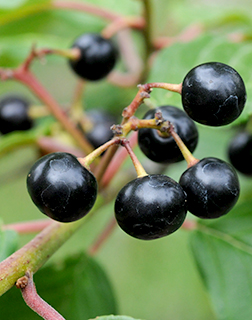
Fruit: A small (1/4 to 1/2 inch diameter), round, black drupe with a yellowish inner pulp, not edible (has laxative properties).
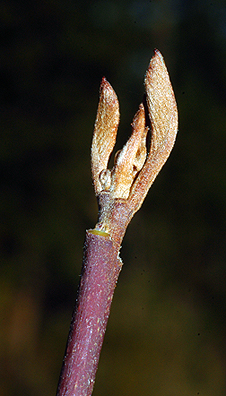
Twig: Young twigs are slender and moderately stout, reddish brown and pubescent; older branches are smooth and reddish brown to gray; buds are naked (without scales) and covered with rusty tomentum.
Bark: Thin and grayish brown, often mottled with white patches of lichens; inner bark is yellow, tastes bitter, and has laxative properties.
Form: Can grow as a tree to 50 feet tall and 10 to 20 inches in diameter or as an erect shrub with multiple stems to 15 feet.
Looks like: California buckthorn
- common buckthorn
- red alder
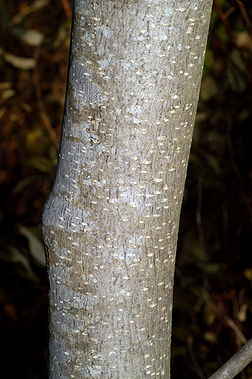
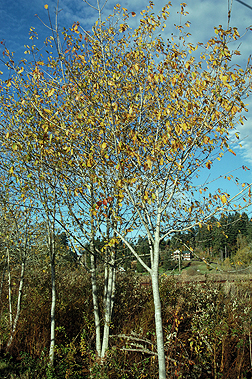
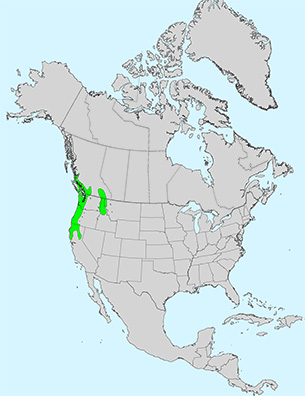
Additional Range Information: Frangula purshiana is native to North America. Range may be expanded by planting. Download the full-size PDF map.
More Information: Fall Color
External Links: USDAFS FEIS Silvics - USDA Plants Database - USDAFS Forest Products Lab
All material 2025 Virginia Tech Dept. of Forest Resources and Environmental Conservation; Photos and text by: John Seiler, Edward Jensen, Alex Niemiera, and John Peterson; Silvics reprinted from Ag Handbook 654; range map source information