 Virginia Tech Dendrology
Pacific serviceberry Rosaceae Amelanchier
alnifolia (Nutt.) Nutt. ex M. Roem.

 symbol: AMAL2
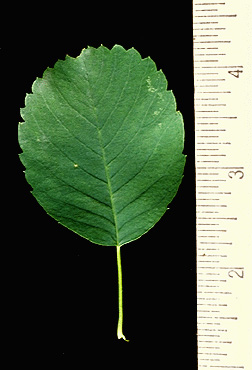
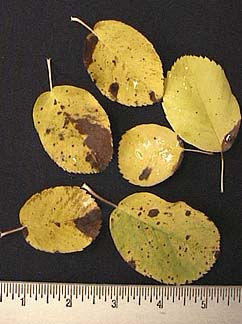
Leaf: Alternate, simple, deciduous, oval, 1 to 2 inches long, and prominently penniveined; upper (distal) margin serrated while lower (basipetal) margin is entire; base rounded and petiole short; veins run out to teeth; green above and paler below.
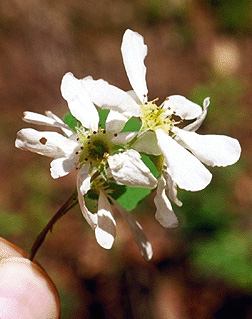
Flower: Perfect, with long (up to 1 inch) white strap-like petals in short racemes, appearing in late spring to early summer.
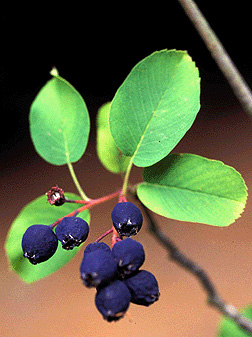
Fruit: Small (1/4 to 1/2 inch), round, dark blue pomes (apple-like), ripen in early to mid summer.
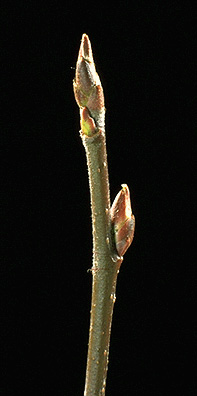
Twig: Slender and smooth, reddish brown when young but turning gray-brown with age; buds about 1/2 inch long with red, imbricate scales that are hairy along the margin.
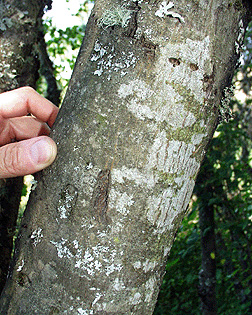
Bark: Thin, light brown and tinged with red; smooth or shallowly fissured.
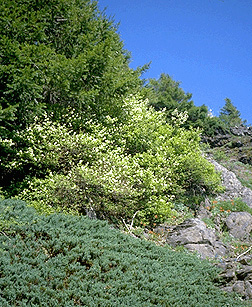
Form: Large erect shrub or small tree growing to 40 feet tall and 6 to 12 inches in diameter, often growing in clusters.
Looks like: Utah serviceberry
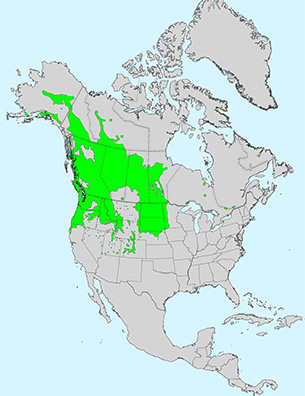
Additional Range Information: Amelanchier alnifolia is native to North America. Range may be expanded by planting. Download the full-size PDF map.
More Information: Fall Color
External Links: USDAFS FEIS Silvics - USDA Plants Database - USDAFS Forest Products Lab
All material 2025 Virginia Tech Dept. of Forest Resources and Environmental Conservation; Photos and text by: John Seiler, Edward Jensen, Alex Niemiera, and John Peterson; Silvics reprinted from Ag Handbook 654; range map source information