 Virginia Tech Dendrology
pignut hickory Juglandaceae Carya
glabra (Mill.) Sweet


 symbol: CAGL8
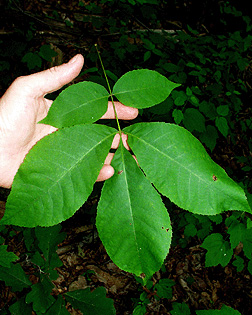
Leaf: Alternate, pinnately compound, 8 to 12 inches long, with 5 (sometimes 7) leaflets, leaflets are lanceolate and serrate, rachis slender and glabrous, green above and paler below.
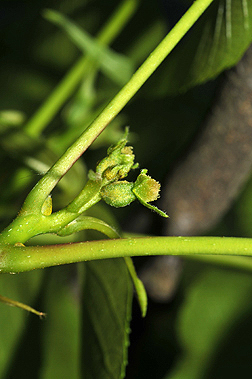
Flower: Species is monoecious; males are yellow-green, drooping catkins, with three hanging from one stalk, 2 to 3 inches long; females are very short and found in clusters at the end of the branches, both appear in spring.
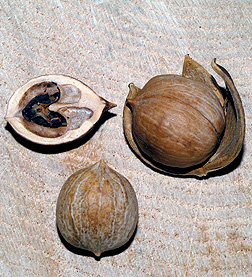
Fruit: Obovoid to pear-shaped, 1 to 2 inches long, with a thin husk that only partially splits upon maturation; nut is not ribbed, fairly round but flattened, seed is somewhat bitter; ripening in early fall.
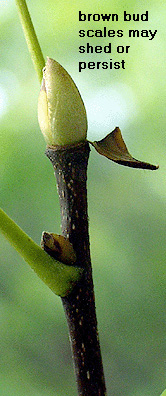
Twig: Moderately stout to slender (when compared to the other hickories) and glabrous; leaf scars are 3-lobed to cordate - best described as a "monkey face"; terminal bud is small (1/4 inch), ovate and light brown in color.
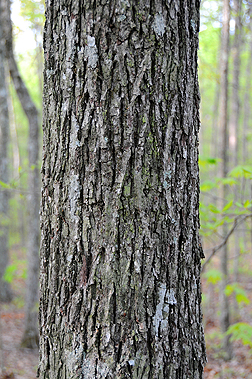
Bark: Initially smooth, and light gray, soon developing scaly ridges; the bark on older trees has obvious close interlacing shaggy-topped ridges.
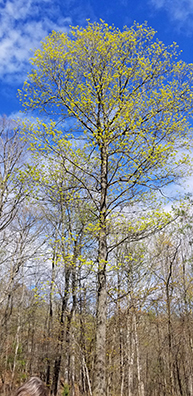
Form: A medium sized to large tree capable of reaching over 100 feet tall, with a rounded crown and a straight trunk.
Looks like: red hickory
- bitternut hickory
- shagbark hickory
- mockernut hickory
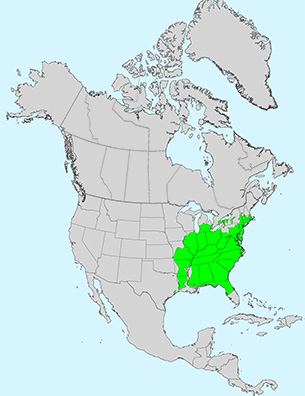
Additional Range Information: Carya glabra is native to North America. Range may be expanded by planting. Download the full-size PDF map.
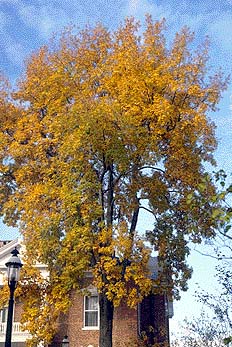
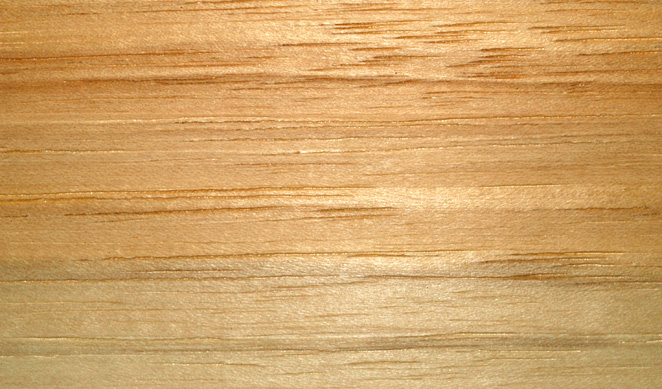
More Information: Fall Color - Wood
External Links: USDAFS Silvics of North America - USDAFS FEIS Silvics - USDA Plants Database - Horticulture Information - USDAFS Forest Products Lab
All material 2025 Virginia Tech Dept. of Forest Resources and Environmental Conservation; Photos and text by: John Seiler, Edward Jensen, Alex Niemiera, and John Peterson; Silvics reprinted from Ag Handbook 654; range map source information