 Virginia Tech Dendrology
lodgepole pine Pinaceae Pinus
contorta Douglas ex Louden

 symbol: PICO
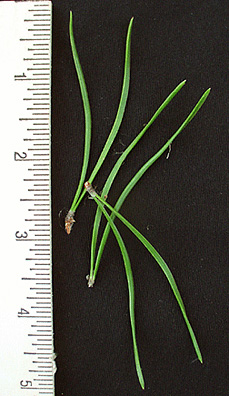
Leaf: Evergreen needles, 1 1/2 to 3 inches long in fascicles of two, twisted, fascicle sheath present; yellow-green to green.
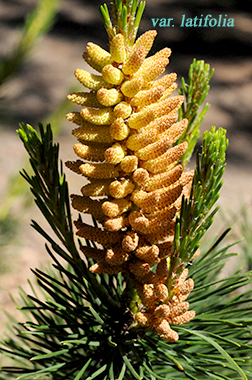
Flower: Species is monoecious; males are yellow, cylindrical and clustered at branch tips; females reddish purple at branch tips in the upper crown.
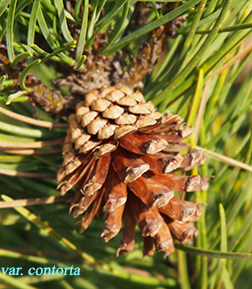
Fruit: Woody cone, 1 to 2 inches long, often asymmetrical and becoming lumpy near the base, apophysis armed with a short spine; light brown to brown; may remain closed for several years.
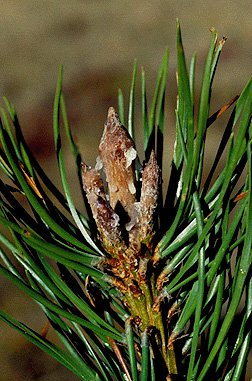
Twig: Orange-brown, turning darker with age, needles are persistent for several years; buds are narrowly ovoid, reddish brown and resinous.
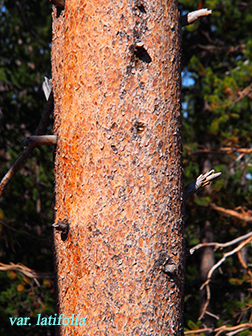
Bark: Thin, typically grayish brown but can be very dark with many small close scales.
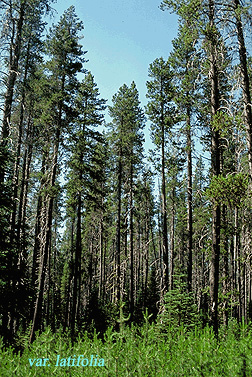
Form: Tall, slender trees with a narrow loose crown reaching up to 80 feet tall; some varieties which grow along the Pacific Coast are very short and scrubby.
Looks like: jack pine
- ponderosa pine
- Bishop pine
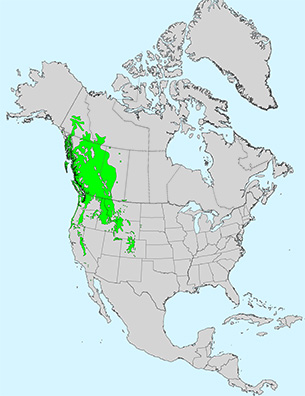
Additional Range Information: Pinus contorta is native to North America. Range may be expanded by planting. Download the full-size PDF map.
More Information: Wood - Landowner Factsheet

External Links: USDAFS Silvics of North America - USDAFS FEIS Silvics - USDA Plants Database - USDAFS Forest Products Lab
All material 2025 Virginia Tech Dept. of Forest Resources and Environmental Conservation; Photos and text by: John Seiler, Edward Jensen, Alex Niemiera, and John Peterson; Silvics reprinted from Ag Handbook 654; range map source information