 Virginia Tech Dendrology
black raspberry Rosaceae Rubus
occidentalis L.


 symbol: RUOC
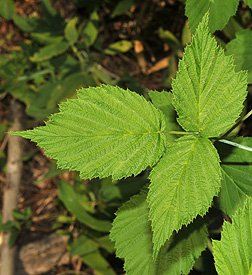
Leaf: Alternate, palmately compound, 3 to 5 inches long and wide, 3 to 5 leaflets with serrated margins, small prickles on petiole, light green above, and much paler (nearly white) below.
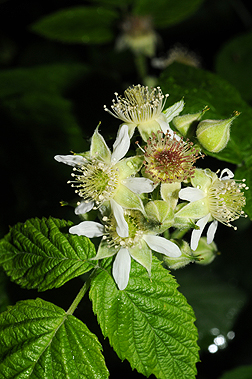
Flower: Species is monoecious; not showy, 5 small greenish white petals, appearing in late spring.
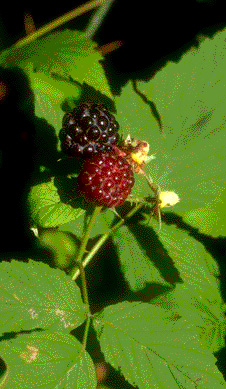
Fruit: Juicy, black, multiple of drupes, 1/2 inch across, ripen in mid summer. When picked they separate from the fleshy core forming a hollow shell.
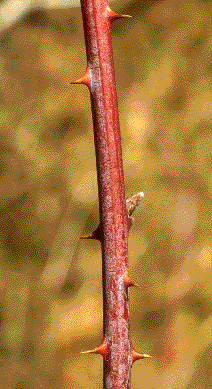
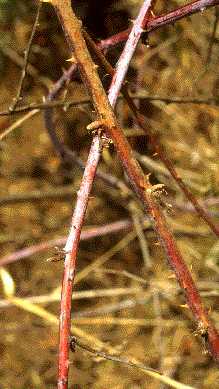
Twig: Arching "canes" which generally live 2 years. Purplish-red with an abundance of white glaucous bloom and hooked prickles. Canes readily root at the tips when they contact the ground.
Bark: Similar to canes but darker and not glaucous.
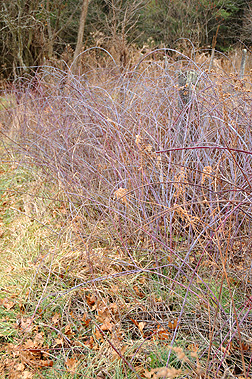
Form: Arching canes may reach 3 to 5 feet high, often forming dense tangled thickets.
Looks like: Alleghany blackberry
- prickly Florida blackberry
- dewberry
- raspberry
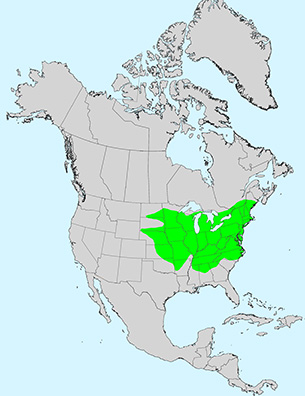
Additional Range Information: Rubus occidentalis is native to North America. Range may be expanded by planting. Download the full-size PDF map.
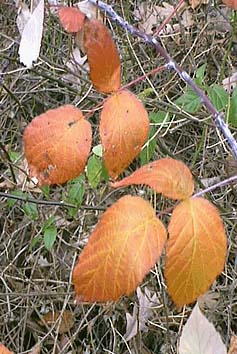
More Information: Fall Color
External Links: USDA Plants Database
All material 2025 Virginia Tech Dept. of Forest Resources and Environmental Conservation; Photos and text by: John Seiler, Edward Jensen, Alex Niemiera, and John Peterson; Silvics reprinted from Ag Handbook 654; range map source information