 Virginia Tech Dendrology
common greenbrier Smilacaceae Smilax
rotundifolia L.


 symbol: SMRO
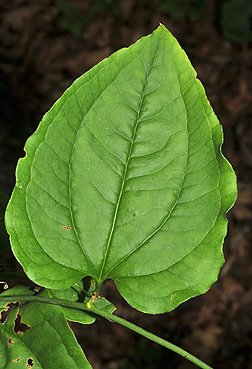
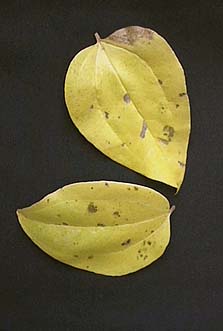
Leaf: Alternate, simple, rounded to cordate, 2 to 5 inches long, parallel veined, entire margins, shiny green above, paler below.
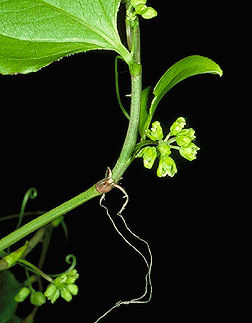
Flower: Species is monoecious; small light yellow-green, borne in small round clusters in late spring.
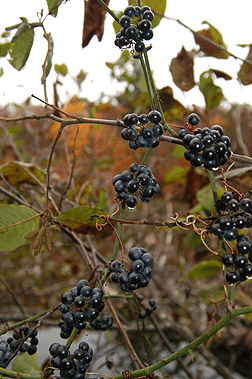
Fruit: Dark blue to black berries, borne in clusters, often covered with a powdery, waxy bloom; maturing in late summer and persist over winter.
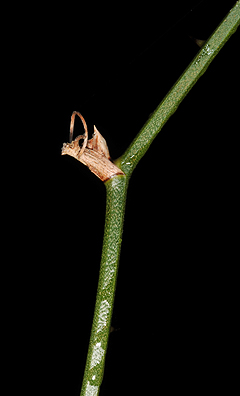
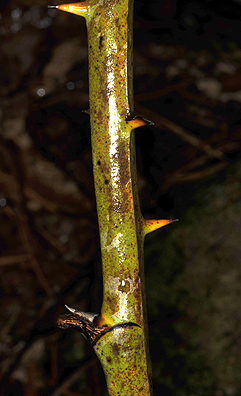
Twig: Stout, green, usually sharply 4-angled with many scattered, stiff prickles, climbs with tendrils; very tough and stiff but new spring sprouts are tender and edible.
Bark: Remaining green for a long period of time, turning brown on old stems.
Form: Most often a climbing vine, but may also form a small, tangled bush.
Looks like: saw greenbrier
- catbrier
- laurel greenbrier
- bristly greenbrier

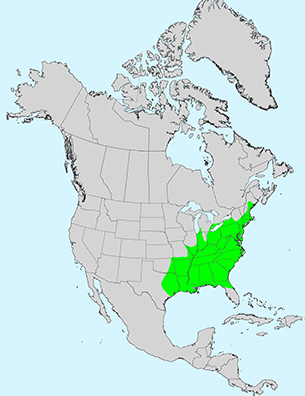
Additional Range Information: Smilax rotundifolia is native to North America. Range may be expanded by planting. Download the full-size PDF map.
More Information: Fall Color
External Links: USDAFS FEIS Silvics - USDA Plants Database
All material 2025 Virginia Tech Dept. of Forest Resources and Environmental Conservation; Photos and text by: John Seiler, Edward Jensen, Alex Niemiera, and John Peterson; Silvics reprinted from Ag Handbook 654; range map source information