 Virginia Tech Dendrology
white spruce Pinaceae Picea
glauca (Moench) Voss


 symbol: PIGL
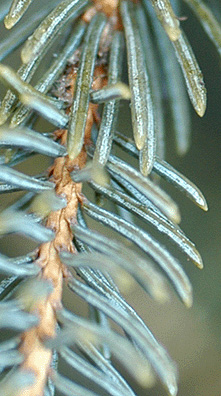
Leaf: Evergreen needles, stiff, 1/3 to 3/4 inch long, square in cross section, needle tips are pointed but not sharp, when crushed a pungent odor is apparent (some say similar to cat urine), green to gray-green. Each needle borne on a raised, woody peg (sterigma).
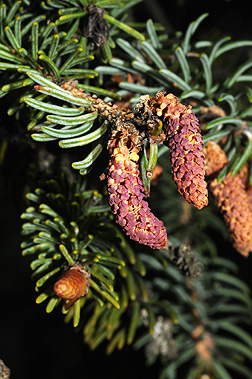
Flower: Species is monoecious; males emerge reddish but turn yellow when shedding pollen; females purple.
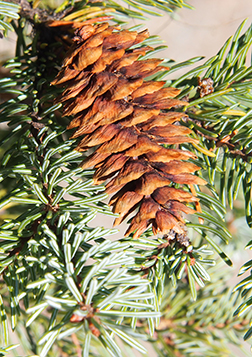
Fruit: Cones are 1 1/2 to 2 1/2 inches long, cigar shaped, light brown in color, scales are rounded with entire margins, mature in late summer.
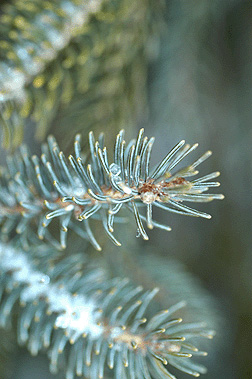
Twig: Slender, light brown or pale, sometimes glaucous, hairless. Needles borne on woody pegs.
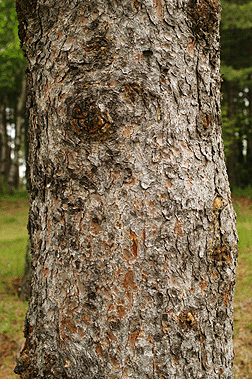
Bark: Thin, gray-brown in color, smooth, later flaky or scaly.
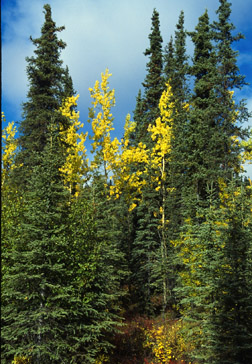
Form: Conical, medium sized trees reaching up to 90 feet tall.
Looks like: black spruce
- red spruce
- Sitka spruce
- blue spruce
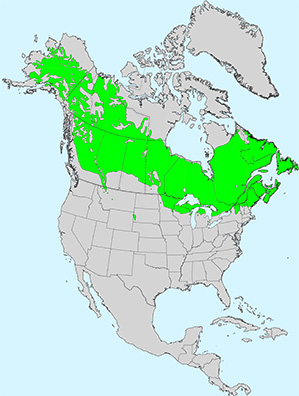
Additional Range Information: Picea glauca is native to North America. Range may be expanded by planting. Download the full-size PDF map.
More Information: Wood - Landowner Factsheet

External Links: USDAFS Silvics of North America - USDAFS FEIS Silvics - USDA Plants Database - Horticulture Information - USDAFS Forest Products Lab
All material 2025 Virginia Tech Dept. of Forest Resources and Environmental Conservation; Photos and text by: John Seiler, Edward Jensen, Alex Niemiera, and John Peterson; Silvics reprinted from Ag Handbook 654; range map source information