 Virginia Tech Dendrology
deer oak Fagaceae Quercus
sadleriana R. Br. ter

 symbol: QUSA2
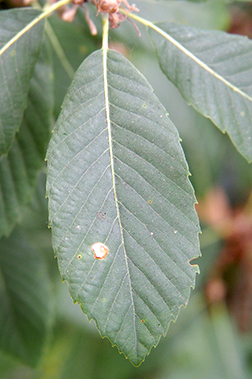
Leaf: Alternate, simple, evergreen, obovate to elliptical, to 6 inches long; pinnately-veined, each vein ending in a distinct tooth; upper surface green, lower surface pale to bronze with stellate hairs; often with persisting stipules at the base of the petiole.
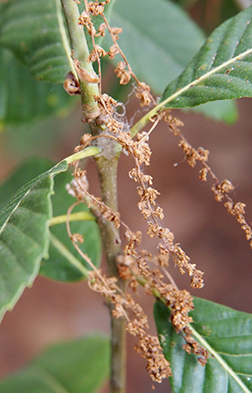
Flower: Species is monoecious; male and female flowers borne in separate catkins, appearing with the leaves.
Fruit: Acorn, 3/4 inch long, yellow-brown; warty cap is funnel shaped, covering about 1/3-1/2 of the nut; maturing in one growing season.
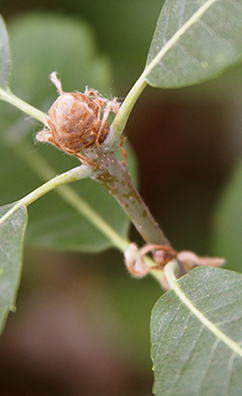
Twig: Red-brown to gray-brown, covered in waxy bloom, mostly glabrous; terminal bud large, nearly round, red-brown with loose pubescent scales.
Bark: Gray, smooth.
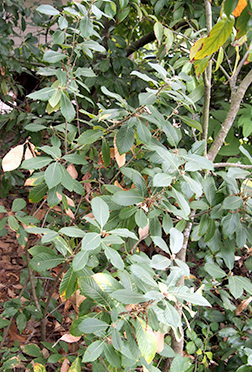
Form: A shurub to 10 feet tall, rhizomatous so forming thickets.
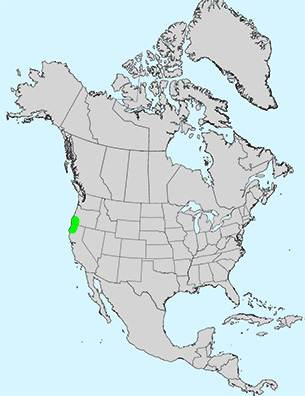
Additional Range Information: Quercus sadleriana is native to North America. Range may be expanded by planting. Download the full-size PDF map.
External Links: USDA Plants Database
All material 2025 Virginia Tech Dept. of Forest Resources and Environmental Conservation; Photos and text by: John Seiler, Edward Jensen, Alex Niemiera, and John Peterson; Silvics reprinted from Ag Handbook 654; range map source information