 Virginia Tech Dendrology
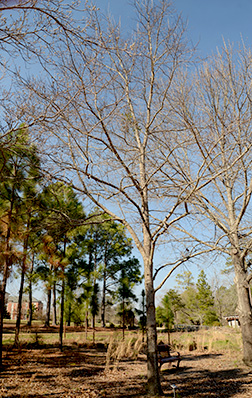
Georgia oak Fagaceae Quercus
georgiana M.A. Curtis

 symbol: QUGE
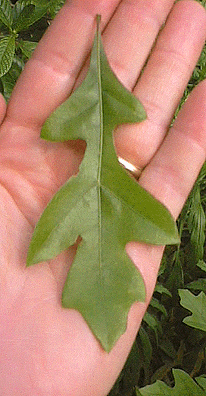
Leaf: Alternate, simple, ovate to obovate, 2 to 5 inches long, with 3 to 7 bristle tipped irregular lobes, base broadly wedge-shaped; dark green and shiny above, paler below with tufts of pubescence in the vein axils; turning red in the fall.
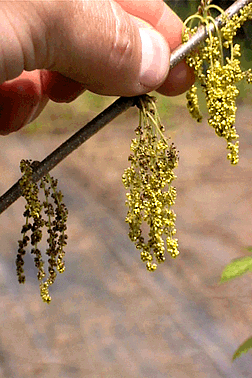
Flower: Species is monoecious; male flowers borne on 2 to 4 inch long pale reddish green catkins; reddish females borne on very short axillary spikes, appears with the leaves in mid-spring.
Fruit: Dark brown striated acorn, 1/3 to 1/2 inch long; saucer-shaped cap covers 1/3 of the nut, cap scales are tightly appressed, matures in the fall after two growing seasons.
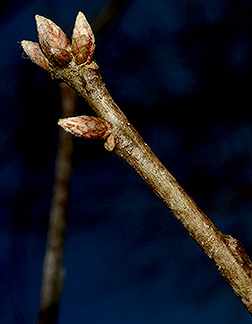
Twig: Red-brown, glabrous; buds red-brown, ovoid, generally glabrous but may have some pubescence on the tips of the bud scales, with multiple end buds.
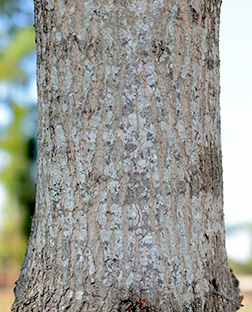
Bark: Gray-brown, initially smooth, becoming ridged and furrowed.
Form: A large shrub or a small tree to 50 feet, but more commonly less than 30 feet.
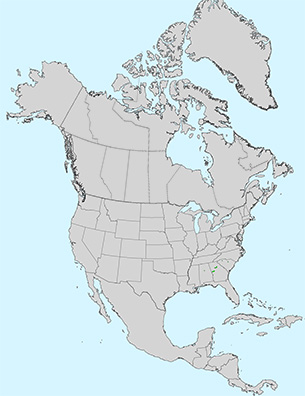
Additional Range Information: Quercus georgiana is native to North America. Range may be expanded by planting. Download the full-size PDF map.
External Links: USDA Plants Database
All material 2025 Virginia Tech Dept. of Forest Resources and Environmental Conservation; Photos and text by: John Seiler, Edward Jensen, Alex Niemiera, and John Peterson; Silvics reprinted from Ag Handbook 654; range map source information