 Virginia Tech Dendrology
Devil's walking stick Araliaceae Aralia
spinosa L.

 symbol: ARSP2
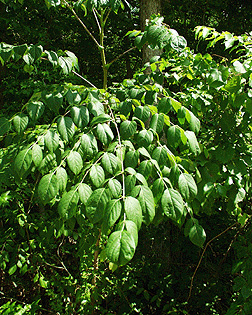
Leaf: Alternate, bi- or tri-pinnately compound, up to 5 feet long; leaflets are 2 to 4 inches long, serrated margin; rachis has scattered prickles; green to blue-green above and paler below.
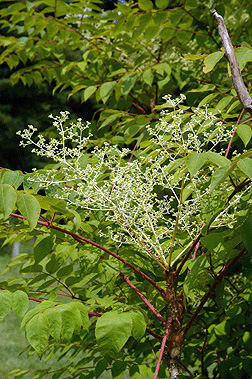
Flower: Species is monoecious; white and quite small, borne on 12 to 18 inch clusters at the ends of branches, appearing in late summer.
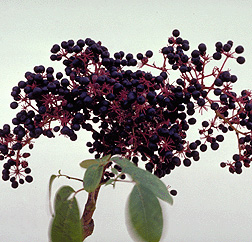
Fruit: A round, fleshy drupe, purple to black and 1/4 inch long; borne in quantity on pink-red clusters; maturing in late summer and early fall.
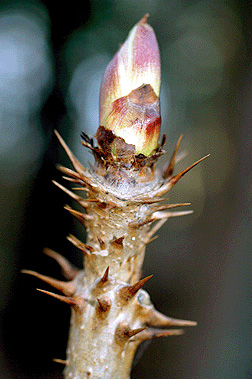
Twig: Very stout and spiny, gray to straw colored, with a slender U-shaped leaf scars that encircle 1/2 of the stem; buds are relatively small, ovoid and oppressed with very few scales.
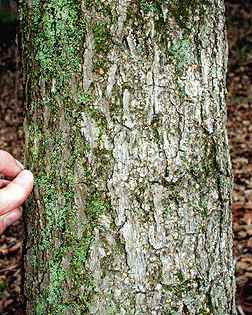
Bark: Gray-brown, spines persisting for some time, largest trees become shallowly furrowed.
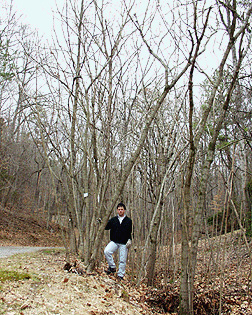
Form: A large shrub or small tree (up to 30 feet) with club-shaped branches; root sprouts and often forms thickets.
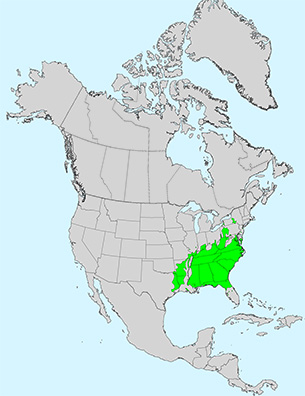
Additional Range Information: Aralia spinosa is native to North America. Range may be expanded by planting. Download the full-size PDF map.
External Links: USDAFS FEIS Silvics - USDA Plants Database - Horticulture Information
All material 2021 Virginia Tech Dept. of Forest Resources and Environmental Conservation; Photos and text by: John Seiler, Edward Jensen, Alex Niemiera, and John Peterson; Silvics reprinted from Ag Handbook 654; range map source information