 Virginia Tech Dendrology
slippery elm Ulmaceae Ulmus
rubra Muhl.


 symbol: ULRU
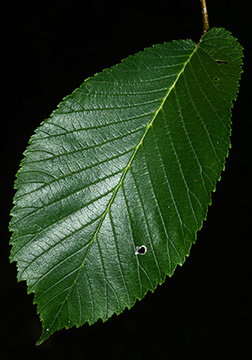
Leaf: Alternate, simple, ovate to oblong, 4 to 6 inches long, 2 to 3 inches wide, margin coarsely and sharply doubly serrated, base conspicuously inequilateral; dark green above and very scabrous, paler and slightly scabrous or hairy beneath.
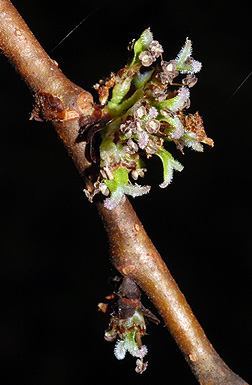
Flower: Species is monoecious; small, light green, in tight clusters of 3 to 5, appearing in early spring before leaves open.
Fruit: Round, papery samara, 3/4 to 1 inch across, margin and surface of wing smooth; surface of seed cavity pubescent, ripen in late spring.
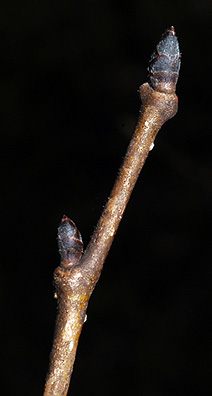
Twig: Often stouter than American elm, slightly zigzag, ashy gray to brownish-gray (often mottled), scabrous; false terminal bud, lateral buds dark, chestnut brown to nearly black; buds may be rusty-hairy, twigs mucilaginous when chewed.
Bark: Dark reddish brown, does not show buff-colored patches or streaks when sectioned; bark fissures not as diamond-shaped as American elm; inner bark mucilaginous.
Form: Medium sized tree to 80 feet, trunk usually free of branches for a greater length than American elm, branches also less drooping.
Looks like: American elm
- winged elm
- cedar elm
- field elm



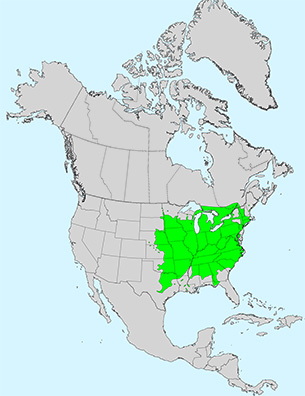
Additional Range Information: Ulmus rubra is native to North America. Range may be expanded by planting. Download the full-size PDF map.
More Information: Fall Color - Wood


External Links: USDAFS Silvics of North America - USDAFS FEIS Silvics - USDA Plants Database - USDAFS Forest Products Lab
All material 2025 Virginia Tech Dept. of Forest Resources and Environmental Conservation; Photos and text by: John Seiler, Edward Jensen, Alex Niemiera, and John Peterson; Silvics reprinted from Ag Handbook 654; range map source information