 Virginia Tech Dendrology
white oak Fagaceae Quercus
alba L.


 symbol: QUAL
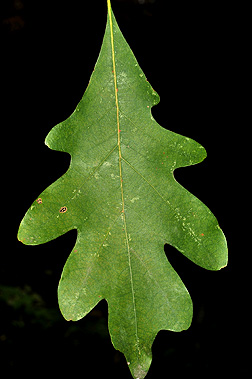
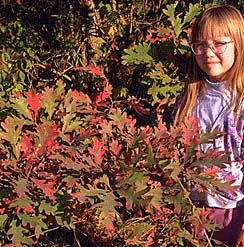
Leaf: Alternate, simple, oblong to ovate in shape, 4 to 7 inches long; 7 to 10 rounded, finger-like lobes, sinus depth varies from deep to shallow, apex is rounded and the base is wedge-shaped, green to blue-green above and whitish below.
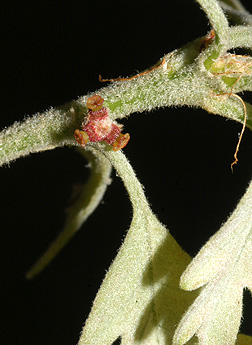
Flower: Species is monoecious; male flowers are yellow-green, borne in naked, slender catkins, 2 to 4 inches long; female flowers are reddish green and appear as very small single spikes; appearing with the leaves in mid-spring.
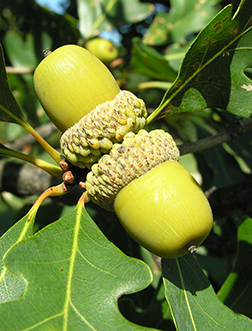
Fruit: Ovoid to oblong acorn, cap is warty and bowl-shaped, covers 1/4 of the fruit; cap always detaches at maturity; matures in one growing season in the early fall.
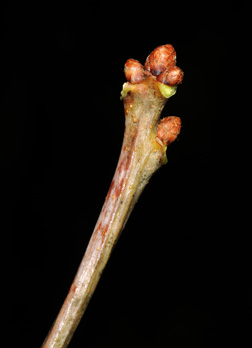
Twig: Red-brown to somewhat gray, even a bit purple at times, hairless and often shiny; multiple terminal buds are red-brown, small, rounded (globose) and hairless.
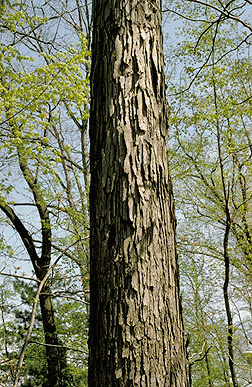
Bark: Whitish or ashy gray, varying from scaly on smaller stems to irregularly platy or blocky on large stems. On older trees smooth patches are not uncommon.
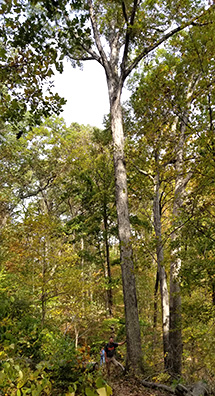
Form: A very large tree; when open grown, white oaks have rugged, irregular crowns that are wide spreading, with a stocky bole. In the forest crowns are upright and oval with trees reaching up to 100 feet tall and several feet in diameter.
Looks like: overcup oak
- bur oak
- post oak
- sand post oak
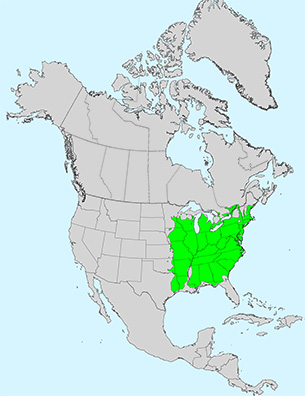
Additional Range Information: Quercus alba is native to North America. Range may be expanded by planting. Download the full-size PDF map.
More Information: Fall Color - Wood
External Links: USDAFS Silvics of North America - USDAFS FEIS Silvics - USDA Plants Database - Horticulture Information - USDAFS Forest Products Lab
All material © 2021 Virginia Tech Dept. of Forest Resources and Environmental Conservation; Photos and text by: John Seiler, Edward Jensen, Alex Niemiera, and John Peterson; Silvics reprinted from Ag Handbook 654; range map source information