 Virginia Tech Dendrology
Virginia creeper Vitaceae Parthenocissus
quinquefolia (L.) Planch.


 symbol: PAQU2
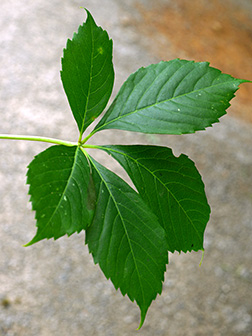
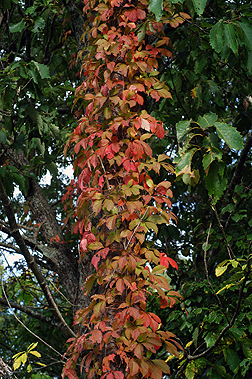
Leaf: Alternate, palmately compound, 4 to 8 inches across, with five elliptical leaflets per leaf, with coarsely crenate to serrate margins, shiny green above and paler below.
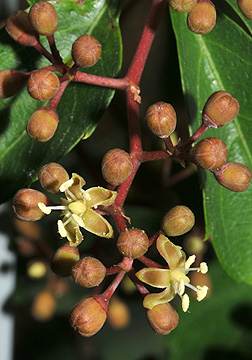
Flower: Small, not showy, green and borne in clusters on long stems, appear in summer.
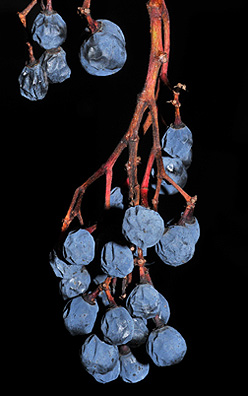
Fruit: A blue-black berry, 1/4 inch in diameter, borne in long-stemmed clusters, maturing in late summer.
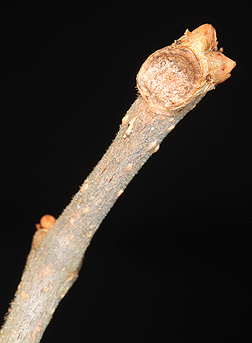
Twig: New stems are slender, light brown in color, with numerous reddish lenticels, tendrils are apparent opposite the buds, ending in adhesive pads; buds are broadly conical with orange-brown scales; leaf scars are nearly round and concave.
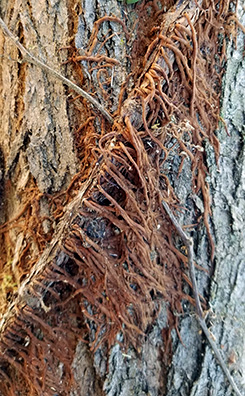
Bark: Gray-brown, becoming coarsely hairy due to aerial roots and tendrils. When rapidly growing, the aerial roots are bright, orange-brown.
Form: A climbing vine that may provide ground cover or ascend to fifty feet. Stems may get several inches in diameter.
Looks like: Boston ivy
- poison-ivy
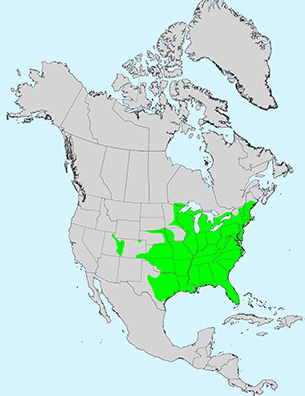
Additional Range Information: Parthenocissus quinquefolia is native to North America. Range may be expanded by planting. Download the full-size PDF map.
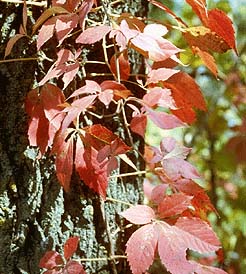
More Information: Fall Color
External Links: USDAFS FEIS Silvics - USDA Plants Database - Horticulture Information
All material © 2021 Virginia Tech Dept. of Forest Resources and Environmental Conservation; Photos and text by: John Seiler, Edward Jensen, Alex Niemiera, and John Peterson; Silvics reprinted from Ag Handbook 654; range map source information