 Virginia Tech Dendrology
common gorse Fabaceae Ulex
europaeus L.

 symbol: ULEU
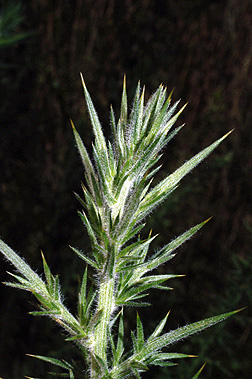
Leaf: Alternate, simple, evergreen, awl-like to linear, 1/8 to 1/2 inch long (juvenile leaves are linear and longer), very stiff and sharp (thorn-like), dark green to gray-green.
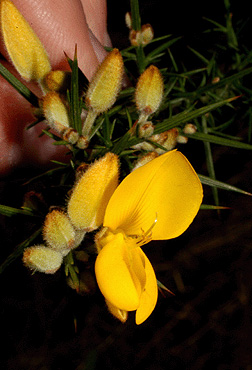
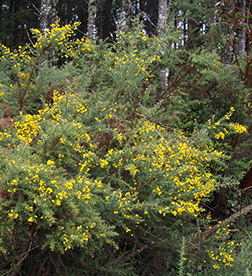
Flower: Attractive, yellow, pea-like, 1 inch long, appearing in spring in great abundance and to a lesser extent in the fall (or even year round depending on the climate). Entire shrub can turn yellow in the spring.
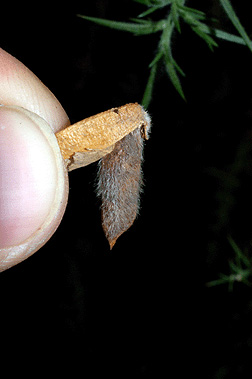
Fruit: Gray, fuzzy, a short (1/2 to 1 inch) legume, dark brown, popping open when ripe ejecting seeds some distance (up to 15 feet).
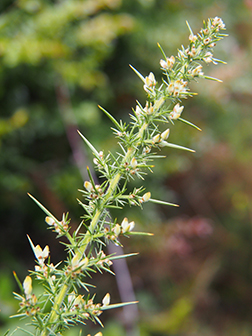
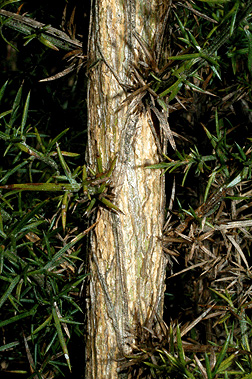
Twig: Stiff, green, angled, each twig ending in a sharp spine up to 2 inches long.
Bark: Shallowly ridged and furrowed, somewhat scaly gray to orange-brown.
Form: A dense, thicket-forming shrub up to 10 feet tall. A gorse thicket is practically impenetrable.
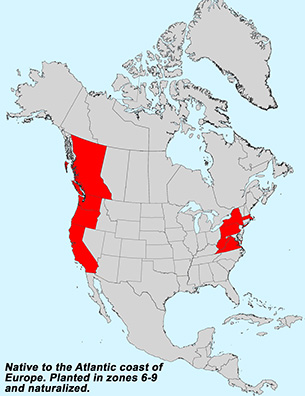
Additional Range Information: Ulex europaeus is planted in the USDA hardiness zones shown above and may seed into the landscape. Download the full-size PDF map.
External Links: USDAFS FEIS Silvics - USDA Plants Database
All material 2025 Virginia Tech Dept. of Forest Resources and Environmental Conservation; Photos and text by: John Seiler, Edward Jensen, Alex Niemiera, and John Peterson; Silvics reprinted from Ag Handbook 654; range map source information