 Virginia Tech Dendrology
turpentine bush Asteraceae Ericameria
laricifolia (A. Gray) Shinners

 symbol: ERLA12
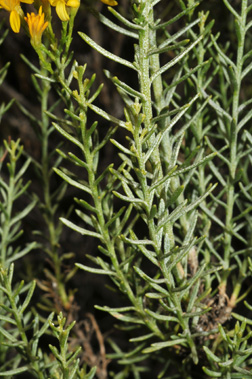
Leaf: Alternate, simple, evergreen, very narrow (needle like), 1/2 to 3/4 inch long, gray-green with sticky resin on both surfaces, turpentine odor when crushed.
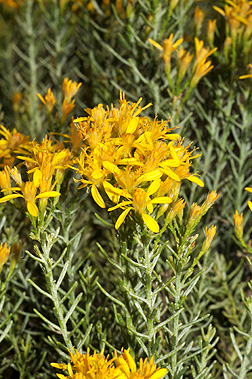
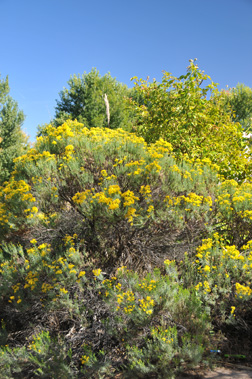
Flower: Species is monoecious; bright yellow conical flowers, 1/4 inch across borne in rounded, terminal clusters, appear in late summer and fall in great abundance making an attractive display.
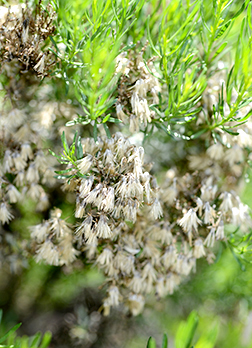
Fruit: Tufted, fluffy achenes (dandelion-like) with angled or ribbed sides, light brown, dried flower parts are persistent after seeds have dispersed.
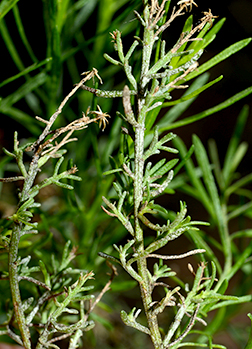
Twig: Young twigs are slender, round, light green in color; later turning a light brown.
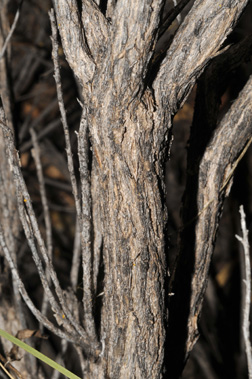
Bark: Reddish brown to gray-brown, developing dark gray ridges and lighter colored furrows.
Form: Short, dense shrub reaching up to 3 feet in height and often much wider.
Looks like: narrowleaf goldenbush
- gray rabbitbrush
- Palmer's goldenbush
- yellow rabbitbrush
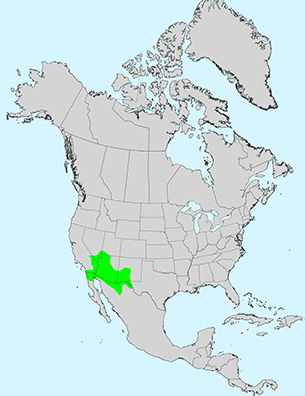
Additional Range Information: Ericameria laricifolia is native to North America. Range may be expanded by planting. Download the full-size PDF map.
External Links: USDA Plants Database
All material 2025 Virginia Tech Dept. of Forest Resources and Environmental Conservation; Photos and text by: John Seiler, Edward Jensen, Alex Niemiera, and John Peterson; Silvics reprinted from Ag Handbook 654; range map source information