 Virginia Tech Dendrology
American elderberry Caprifoliaceae Sambucus
nigra ssp. canadensis L. ssp. (L.) R. Bolli


 symbol: SANIC4
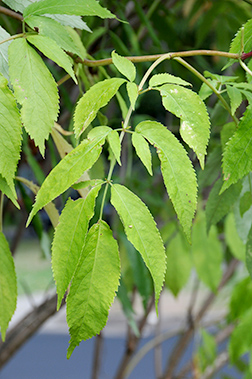
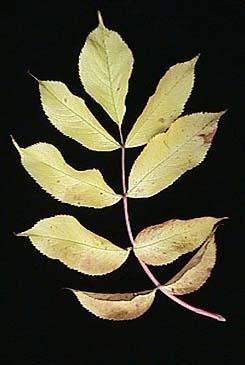
Leaf: Opposite, pinnately compound, 6 to 11 inches long, with 5 to 11 elliptical, serrate leaflets, acuminate tips, bottom leaflets are often 3-lobed, dark green above and much paler below.
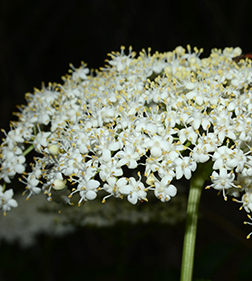
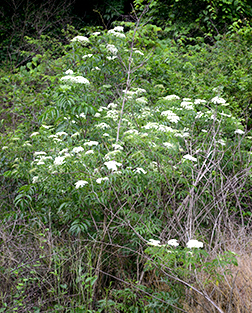
Flower: Species is monoecious; small, white, borne in dense, flat-topped clusters, up to 8 inches across, appearing in summer.
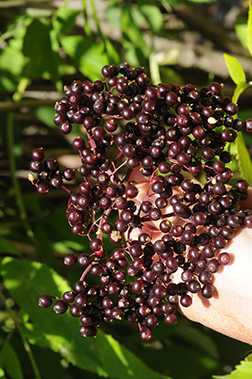
Fruit: Small, berrylike drupe, purple-black, and very juicy, up to 1/4 inch in diameter, borne in flat-topped clusters, maturing in late summer.
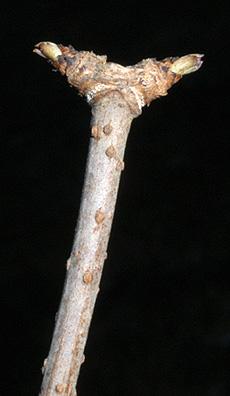
Twig: Stout, silvery- to yellow-gray with obvious, warty lenticles, large white pith; buds are very small, red-brown and pointed, terminal buds are generally lacking.
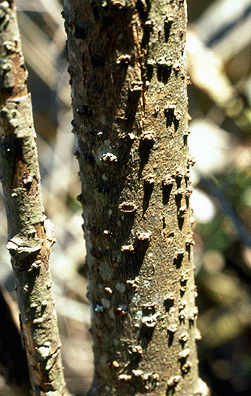
Bark: Smooth and brown with obvious warts, becoming shallowly furrowed and rough with age.
Form: A large shrub or small tree often with multiple stems that are spreading or arching reaching up to 12 feet tall. The trunk is usually short.
Looks like: blue elderberry
- red elderberry
- green ash
- boxelder
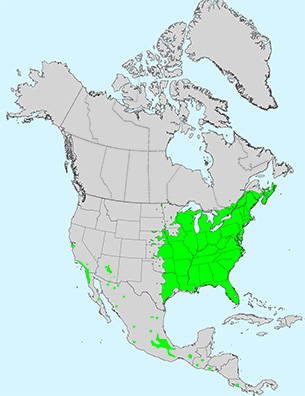
Additional Range Information: Sambucus nigra ssp. canadensis is native to North America. Range may be expanded by planting. Download the full-size PDF map.
More Information: Fall Color
External Links: USDA Plants Database - Horticulture Information - USDAFS Forest Products Lab
All material 2025 Virginia Tech Dept. of Forest Resources and Environmental Conservation; Photos and text by: John Seiler, Edward Jensen, Alex Niemiera, and John Peterson; Silvics reprinted from Ag Handbook 654; range map source information