 Virginia Tech Dendrology
sugar sumac Anacardiaceae Rhus
ovata S. Watson

 symbol: RHOV
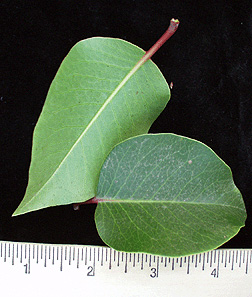
Leaf: Alternate, simple, evergreen, ovate, leathery, 3 to 4 inches long, sharp pointed, entire margin (maybe toothed), folded along the midrib, shiny green above, paler beneath, fragrant.
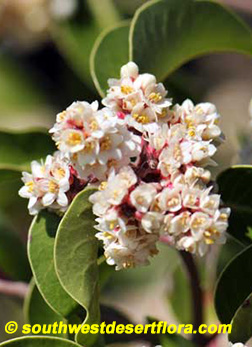
Flower: Tight clusters of very small white to pink flowers with 5 petals, clusters occur at ends of twigs and are 2 to 3 inches long, appearing in spring.
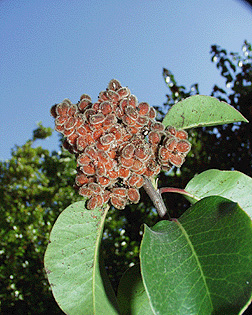
Fruit: Elliptical, 1/8 inch across, fuzzy and red in clusters at the ends of the twigs, ripen in late summer and persist into winter.
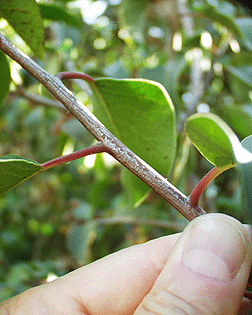
Twig: Moderately stout, red and green (later turning gray), smooth with small hairy buds nearly hidden by petiole.
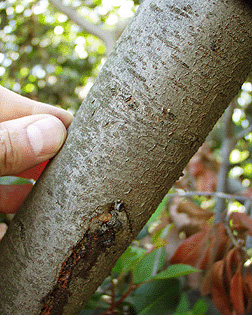
Bark: Smooth and grayish brown, later becoming scaly and rough.
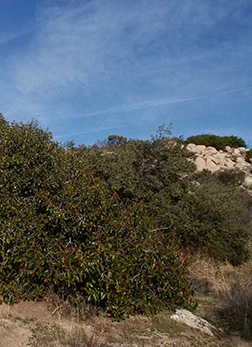
Form: Large thicket forming shrub reaching up to 15 feet with a spreading, sprawling crown.
Looks like: lemonade sumac
- laurel sumac
- hollyleaf cherry

Additional Range Information: Rhus ovata is native to North America. Range may be expanded by planting. Download the full-size PDF map.
External Links: USDA Plants Database - USDAFS Forest Products Lab
All material 2025 Virginia Tech Dept. of Forest Resources and Environmental Conservation; Photos and text by: John Seiler, Edward Jensen, Alex Niemiera, and John Peterson; Silvics reprinted from Ag Handbook 654; range map source information