 Virginia Tech Dendrology
English oak Fagaceae Quercus
robur L.

 symbol: QURO2
Leaf: Alternate, simple, obovate to oblong, 4 to 6 inches long, 3 to 7 pairs of rounded lobes with sinuses going halfway to midvein, very small ear-lobes at leaf base, very short petiole, dark shiny green above, paler blue-green beneath.
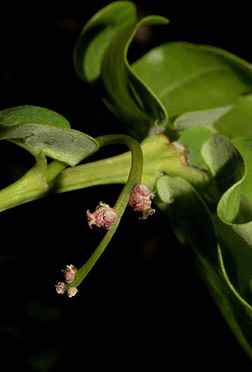
Flower: Species is monoecious; males are slender yellow-green catkins 2 to 3 inches long; females are very small, in clusters of 2 to 4 in leaf axils, appear in early spring with the leaves.
Fruit: Acorn, 3/4 to 1 inch long, narrow, borne singly or in clusters on a long stalk, cap covers about 1/3 of acorn, matures in one season.
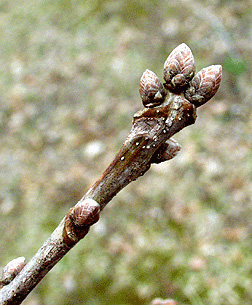
Twig: Moderate, yellow-brown, smooth; brown buds are angled, short and round with each scale edged in light brown.
Bark: Gray-brown, and becoming deeply fissured with age.
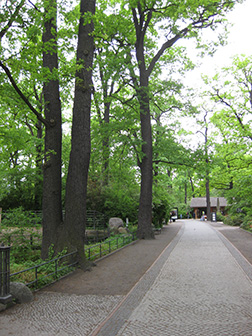
Form: A large tree with a round crown that can reach over 100 feet tall.
Looks like: white oak
- Oregon white oak



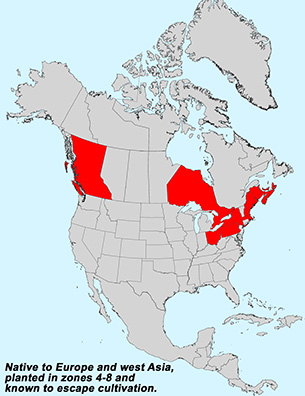
Additional Range Information: Quercus robur is planted in the USDA hardiness zones shown above and may seed into the landscape. Download the full-size PDF map.
External Links: USDA Plants Database - Horticulture Information
All material 2021 Virginia Tech Dept. of Forest Resources and Environmental Conservation; Photos and text by: John Seiler, Edward Jensen, Alex Niemiera, and John Peterson; Silvics reprinted from Ag Handbook 654; range map source information