 Virginia Tech Dendrology
California sycamore Platanaceae Platanus
racemosa Nutt.

 symbol: PLRA
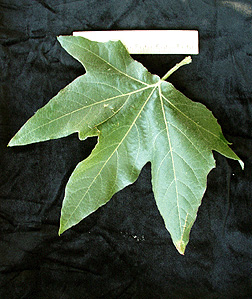
Leaf: Alternate, simple, deciduous, 5 to 10 inches long, palmately lobed (usually 3-5 lobes) with lobes about half as long as the leaf; hairy when young; petioles are long, swollen at their base, and hairy.
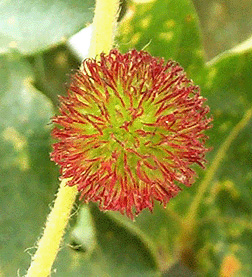
Flower: Species is monoecious but imperfect, male and female flowers are tiny and borne in dense, round heads (like fuzzy marbles on a string).
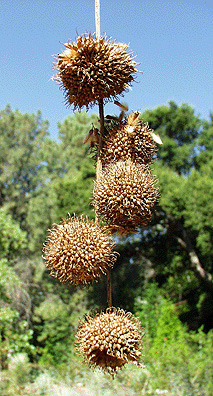
Fruit: Golf ball sized heads of tufted achenes; 3 to 7 hang on a long pendulous stalk designed to fracture at maturity; seeds are wind dispersed.
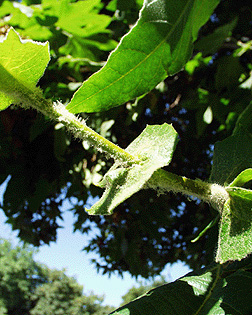
Twig: Slender and covered with numerous fine hairs when young; becoming smooth and reddish brown with age. Terminal buds absent; lateral buds conical.
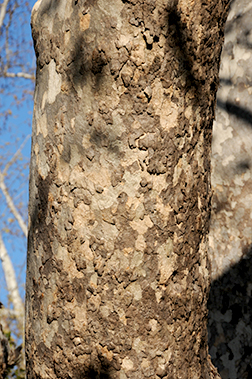
Bark: The most striking feature of this tree. Young greenish-gray bark exfoliates leaving almost pure white inner bark; older bark is thicker (1 to 3 inches), furrowed, and dark brown.
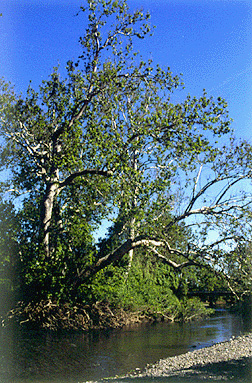
Form: A medium to tall tree (40 to 100 feet tall) that sometimes reaches 11 feet in diameter. Crown is open and rounded.
Looks like: Arizona sycamore
- American sycamore
- London plane tree
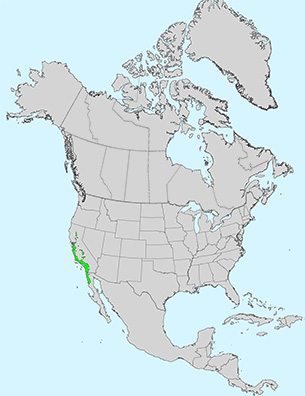
Additional Range Information: Platanus racemosa is native to North America. Range may be expanded by planting. Download the full-size PDF map.
External Links: USDA Plants Database - USDAFS Forest Products Lab
All material 2025 Virginia Tech Dept. of Forest Resources and Environmental Conservation; Photos and text by: John Seiler, Edward Jensen, Alex Niemiera, and John Peterson; Silvics reprinted from Ag Handbook 654; range map source information