 Virginia Tech Dendrology
golden chinkapin Fagaceae Chrysolepis
chrysophylla (Douglas ex Hook.) Hjelmqvist

 symbol: CHCH7
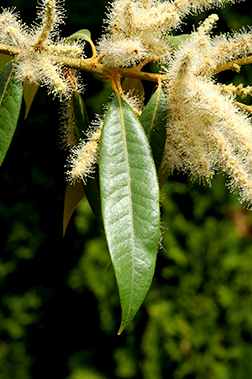
Leaf: Alternate, simple, persistent, lanceolate to narrowly elliptical, 2 to 6 inches long, leathery, margins entire, smooth and green to yellow-green above, golden underneath with color coming from pubescence and scaliness.
Flower: Species is monoecious; both sexes borne in erect aments (catkins), male flowers are numerous, erect, elongated aments, dull yellow; odorous; female flowers are much smaller and are clustered at the base of the male flowers.
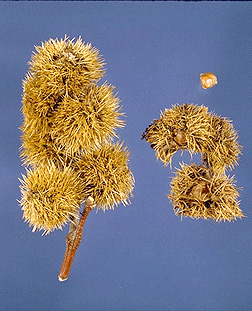
Fruit: One or 2 small triangular nuts enclosed in a sharp, spiny bur, both are light brown when mature, burs may be clustered
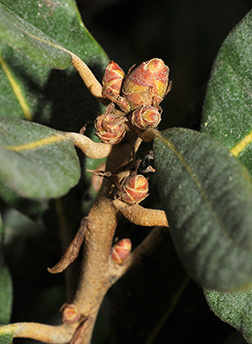
Twig: Slender and initially yellow but turning reddish brown with age; pith is yellow and star-shaped; terminal buds are clustered near the tip.
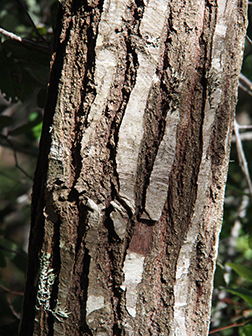
Bark: Initially smooth, grayish brown, and mottled with large, white areas, later becoming 1 to 2 inches thick, distinctly furrowed and ridged.
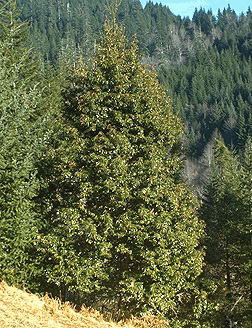
Form: Usually grows as a moderate to large broad-leaved evergreen tree (to 150 feet tall and 3 to 6 feet in diameter) with a dense, pyramidal or conical crown, but at higher elevations it may occur as a shrub.
Looks like: tanoak
- California-laurel
- bush chinquapin

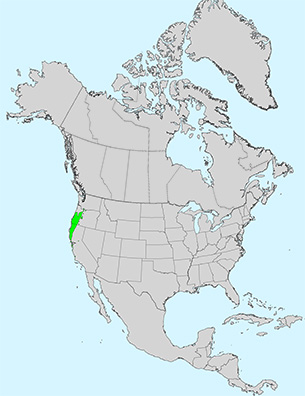
Additional Range Information: Chrysolepis chrysophylla is native to North America. Range may be expanded by planting. Download the full-size PDF map.
More Information: Fall Color

External Links: USDAFS Silvics of North America - USDAFS FEIS Silvics - USDA Plants Database - USDAFS Forest Products Lab
All material 2025 Virginia Tech Dept. of Forest Resources and Environmental Conservation; Photos and text by: John Seiler, Edward Jensen, Alex Niemiera, and John Peterson; Silvics reprinted from Ag Handbook 654; range map source information