 Virginia Tech Dendrology
ginkgo Ginkgoaceae Ginkgo
biloba L.


 symbol: GIBI2
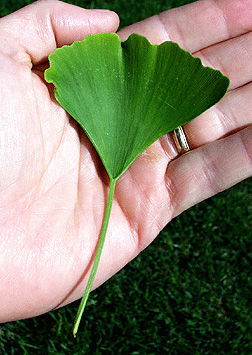
Leaf: Alternate, simple, fan-shaped, 2 to 3 inches long and wide; parallel, fan-like veination, may be irregularly 2 to 3 lobed at the broad edge or just wavy, petiole long, light green above and below.
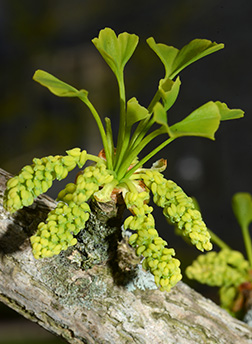
Flower: Species is dioecious; tiny green males are borne on 1 inch long catkins; female "cones" are 1 1/2 to 2 inch long peduncles, bearing 1 to 2 ovules, present in mid-spring.
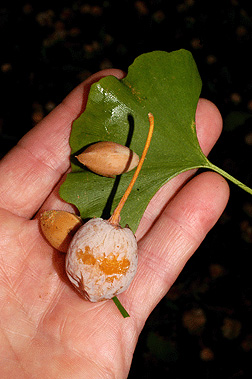
Fruit: Actually a naked seed; 1 inch long, with a fleshy covering that develops a strong, unpleasant odor when it drops to the ground, inner hard seed is edible, maturing in the fall after the first frost.
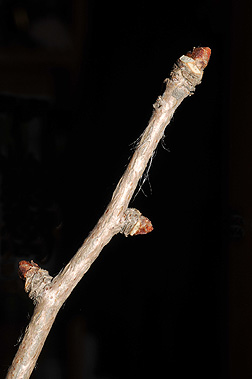
Twig: Light reddish brown, becoming gray with numerous and obvious spur shoots; buds are broadly conical to dome-shaped and reddish brown.
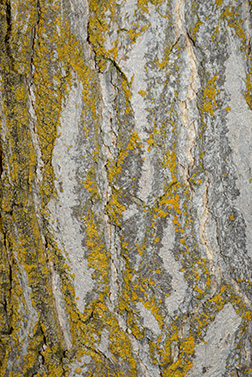
Bark: Light grayish brown with irregular ridges, eventually becoming deeply furrowed.
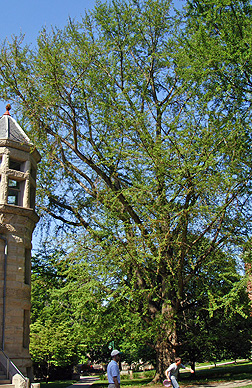
Form: Usually a narrow, oval crown when young, eventually developing an irregular, much broader crown of a few large branches. Spur shoots are obvious.
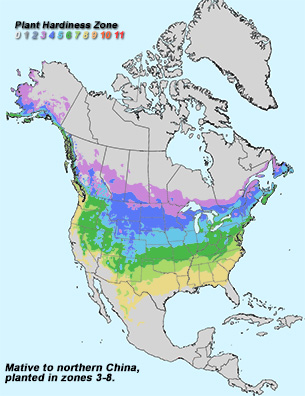
Additional Range Information: Ginkgo biloba is planted in the USDA hardiness zones shown above and is not known to widely escape cultivaton. Download the full-size PDF map.
More Information: Fall Color

External Links: USDA Plants Database - Horticulture Information
All material 2025 Virginia Tech Dept. of Forest Resources and Environmental Conservation; Photos and text by: John Seiler, Edward Jensen, Alex Niemiera, and John Peterson; Silvics reprinted from Ag Handbook 654; range map source information