 Virginia Tech Dendrology
European beech Fagaceae Fagus
sylvatica L.


 symbol: FASY
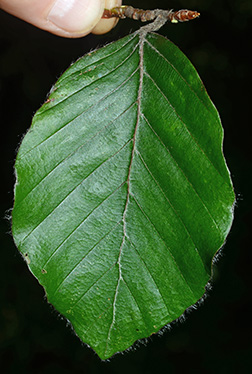
Leaf: Alternate, simple, ovate or elliptical, 2 to 4 inches long, pinnately-veined (7 to 9 pairs), with a nearly entire to somewhat toothed or wavy margin. Fine hairs present on margin with tomentum on veins. Shiny green in color, but purple varieties are planted.
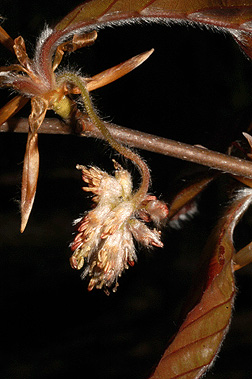
Flower: Species is monoecious; male flowers borne on globose heads hanging from a slender stalk, female flowers borne on shorter spikes. Flowers appear just after leaves in the spring.
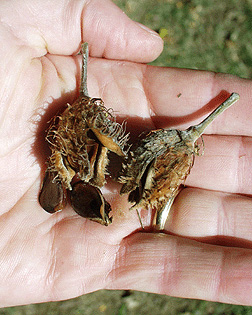
Fruit: Nuts are irregularly triangular, shiny brown and edible, found in pairs within a woody husk covered with spines, 1 inch long, maturing in the fall.
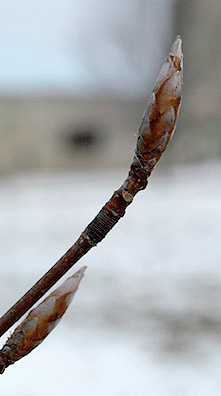
Twig: Slender, zigzag, light brown in color; buds are long (1 inch), light brown, and slender, covered with overlapping scales that are tinged with tomentum, widely divergent from stems.
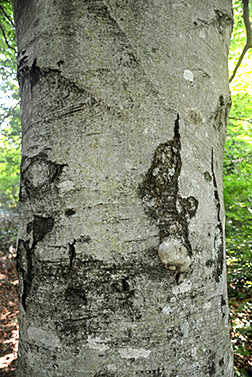
Bark: Smooth, thin, and dark gray-blue in color, smooth even on the largest stems, may be mottled.
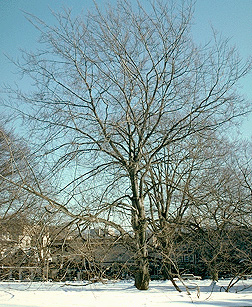
Form: A medium size tree reaching up to 90 feet tall with a stocky trunk and a round crown.
Looks like: Oriental beech
- American beech
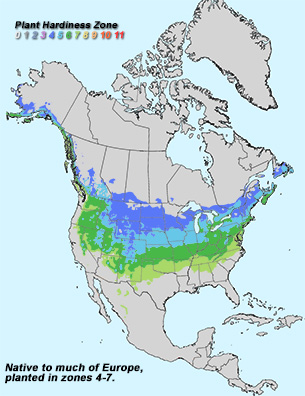
Additional Range Information: Fagus sylvatica is planted in the USDA hardiness zones shown above and is not known to widely escape cultivaton. Download the full-size PDF map.
More Information: Fall Color

External Links: USDA Plants Database - Horticulture Information
All material 2025 Virginia Tech Dept. of Forest Resources and Environmental Conservation; Photos and text by: John Seiler, Edward Jensen, Alex Niemiera, and John Peterson; Silvics reprinted from Ag Handbook 654; range map source information