 Virginia Tech Dendrology
western burning bush Celastraceae Euonymus
occidentalis Nutt. ex Torr.

 symbol: EUOC8
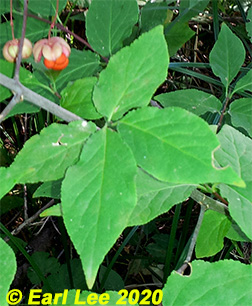
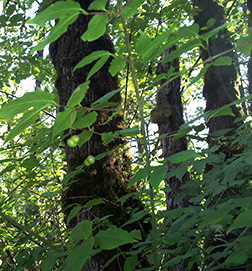
Leaf: Opposite, simple, elliptical, 2 to 6 inches long, finely serrated, long pointed, green above, paler below; combined with slender twigs resembling pinnately compound leaves.
Flower: Perfect, inconspicuous (1/3 inch across), 5 pink to purple-brown mottled petals with whitish anthers, appearing in late spring to early summer in clusters of five or less.
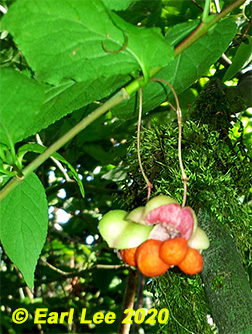
Fruit: 3(sometimes 4)-lobed capsule, 1/2 inch across, white to pink in color, splits open to reveal orange-red seeds, ripens in fall.
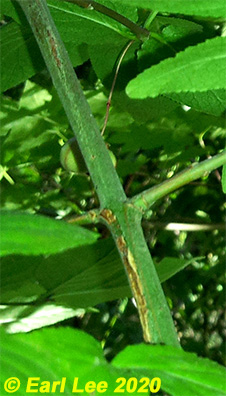
Twig: Slender, green turning brown with age, maybe 4-sided, leaf scars are light brown (nearly white) and obvious against green twig; buds are pale green and sharp pointed.
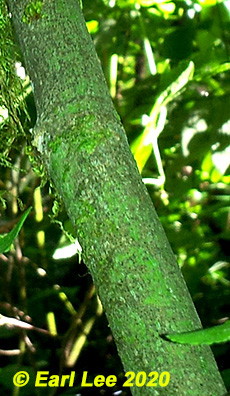
Bark: Thin, greenish-brown to reddish brown, shallow longitudinal splits.
Form: A low branching shrub that reaches 20 feet in height.
Looks like: spindletree
- eastern wahoo
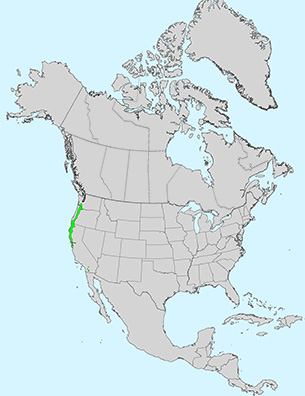
Additional Range Information: Euonymus occidentalis is native to North America. Range may be expanded by planting. Download the full-size PDF map.
External Links: USDA Plants Database
All material 2025 Virginia Tech Dept. of Forest Resources and Environmental Conservation; Photos and text by: John Seiler, Edward Jensen, Alex Niemiera, and John Peterson; Silvics reprinted from Ag Handbook 654; range map source information