 Virginia Tech Dendrology
northern pin oak Fagaceae Quercus
ellipsoidalis E.J. Hill

 symbol: QUEL
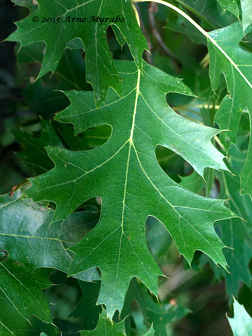
Leaf: Alternate, simple, 3 to 6 inches long, oval in shape with very deep sinuses and bristle-tipped lobes, somewhat shiny green above, paler and generally hairless below but may have tufts in vein axils.
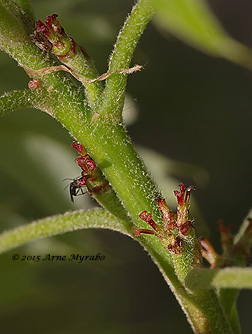
Flower: Species is monoecious; males are borne on slender yellow-green catkins; females are borne on very short axilliary spikes, both appear with the leaves in spring.
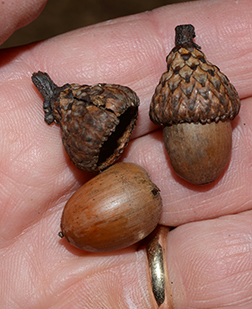
Fruit: Acorns are 1/2 to 1 inch long, elliptical to almost round; the cap covering 1/2 of the nut, cap scales are pubescent, scales on edges of cap generally loose; the tip of the acorn lacks concentric rings; maturing in two years and ripening in the fall.
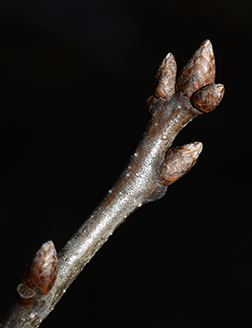
Twig: Red-brown with multiple terminal buds; buds reddish brown, pointed, slightly angled, mostly hairless scales but terminal scales may bear some frosty pubescence.
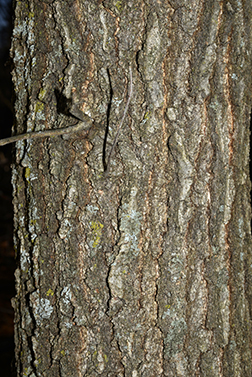
Bark: On young trees, gray-brown, with smooth streaks; later becoming darker and developing irregular broad ridges and narrow furrows especially near the base; inner bark orangish.
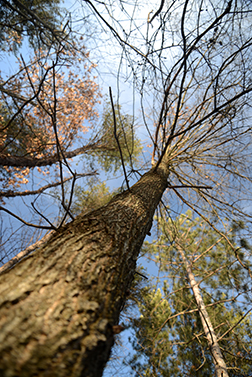
Form: A small to medium-sized tree reaching up to 70 feet tall with generally poor form, irregular crown, and many dead branches.
Photos graciously provided by Arne Myrabo.
Looks like: scarlet oak
- pin oak
- black oak
- northern red oak
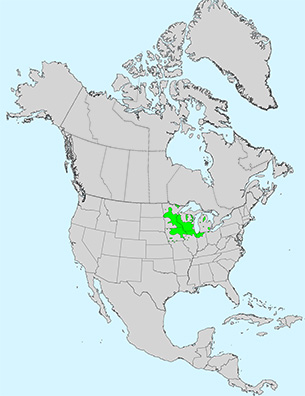
Additional Range Information: Quercus ellipsoidalis is native to North America. Range may be expanded by planting. Download the full-size PDF map.
External Links: USDAFS FEIS Silvics - USDA Plants Database
All material 2025 Virginia Tech Dept. of Forest Resources and Environmental Conservation; Photos and text by: John Seiler, Edward Jensen, Alex Niemiera, and John Peterson; Silvics reprinted from Ag Handbook 654; range map source information