 Virginia Tech Dendrology
western trumpet honeysuckle Caprifoliaceae Lonicera
ciliosa (Pursh) Poir. ex DC.

 symbol: LOCI3
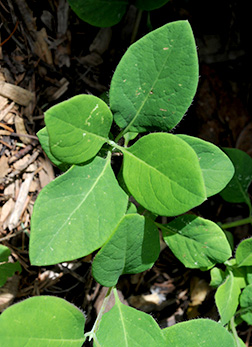
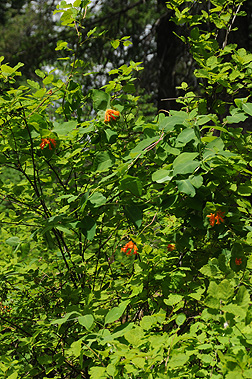
Leaf: Deciduous, opposite, simple, oval, 2-4 inches long, green to blue-green above with whitish bloom below, margins are entire but with fine hairs; terminal pair fused into a single disk.
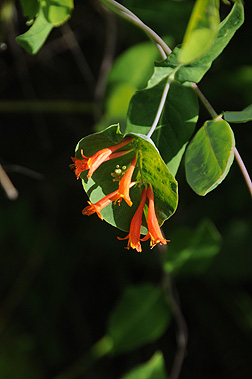
Flower: Orange-yellow, narrowly trumpet-shaped, 1-2 inches long; borne in whorls above the terminal leaf disk.
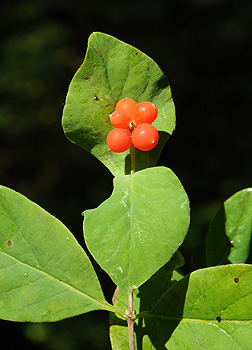
Fruit: Orange-red translucent berries with several seeds; occur in small bunches above the terminal leaf disk. Reports of edibility vary from edible to mildly poisonous (don't take chances).
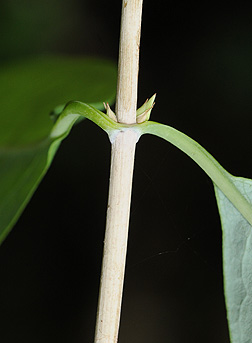
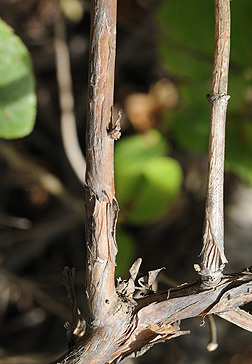
Twig: Thin and vine-like; commonly twist around one another; hollow; tan with red tinges; covered with white bloom when young.
Bark: Thin, reddish-brown, and often shreddy.
Form: Widely branched climbing or sprawling vine up to 20’ long.
Looks like: pink honeysuckle
- Japanese honeysuckle
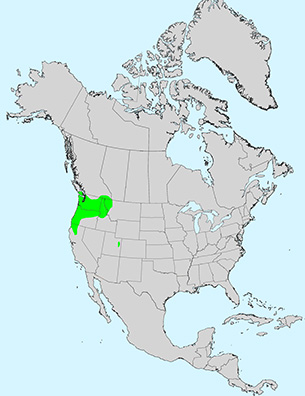
Additional Range Information: Lonicera ciliosa is native to North America. Range may be expanded by planting. Download the full-size PDF map.
External Links: USDA Plants Database
All material 2025 Virginia Tech Dept. of Forest Resources and Environmental Conservation; Photos and text by: John Seiler, Edward Jensen, Alex Niemiera, and John Peterson; Silvics reprinted from Ag Handbook 654; range map source information