 Virginia Tech Dendrology
lowbush blueberry Ericaceae Vaccinium
pallidum Aiton


 symbol: VAPA4
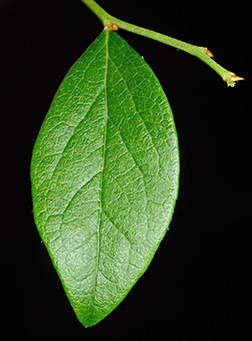
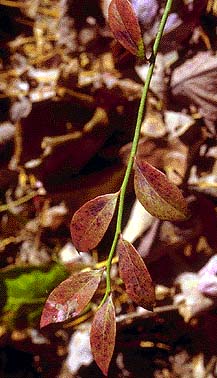
Leaf: Alternate, simple, elliptical and borne on a short petiole, 1 to 2 inches long, very finely serrated or ciliated margins (nearly entire), dull green above, pale almost white beneath.
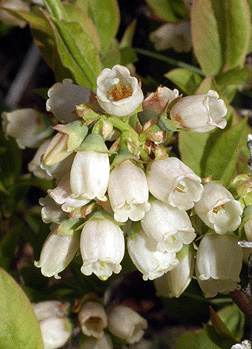
Flower: Species is monoecious; showy but small, white and bell-shaped, occur in tight, hanging clusters in mid-spring.
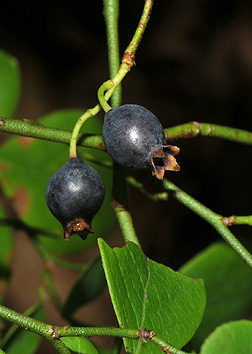
Fruit: Small, blue-black berry usually with white bloom, containing many small seeds. Fruits are sweet and edible when mature in mid summer.
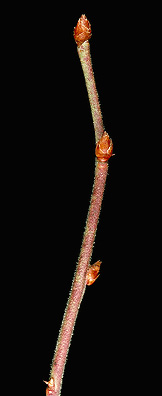
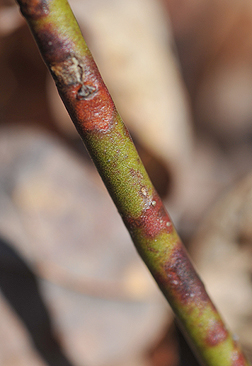
Twig: Slender, zigzag, green (some red), very finely gray fuzzy when new, with a continuous small pith; leaf scars are small with one bundle trace; buds are red and very small, and the end bud is lacking.
Bark: Smooth, green to green-red, usually remains green to the ground.
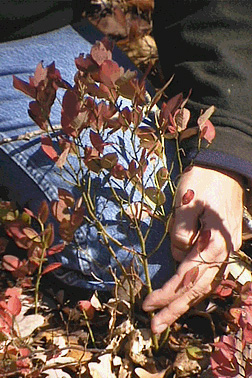
Form: Stoloniferous small shrub reaching up to two to three feet tall.
Looks like: highbush blueberry
- huckleberry
- deerberry
- sparkleberry
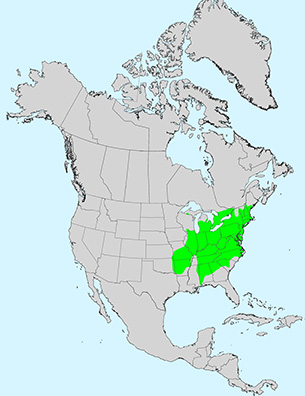
Additional Range Information: Vaccinium pallidum is native to North America. Range may be expanded by planting. Download the full-size PDF map.
More Information: Fall Color
External Links: USDAFS FEIS Silvics - USDA Plants Database
All material 2025 Virginia Tech Dept. of Forest Resources and Environmental Conservation; Photos and text by: John Seiler, Edward Jensen, Alex Niemiera, and John Peterson; Silvics reprinted from Ag Handbook 654; range map source information